
Planning

Planning

  • Habio

    Habio is a habit tracker that focuses on the user’s approach to creating and keeping habits rather than just tracking them. When the user opens up the app, they begin by choosing one habit they would like to begin. Users can choose from pre-set options or create their own custom habit. They will then be asked to choose how often they want to track this habit and how many times within those days they would like to do it. 

  • Pixelist

    Pixelist is a habit tracking app that uses a minimalist approach. The user opens the app, creates the habits they want to track by clicking on the “Add Habit” button on the left-hand side of the screen. The user can then choose from assorted color themes, which change the look of the screen and the pixels that appear when you complete a routine successfully. 

  • Sushi Monster

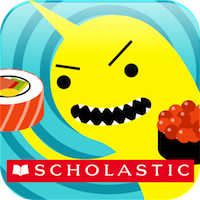
    Sushi Monster is a game created by the Scholastic educational team in which players must solve a series of addition and multiplication math problems. Numbers appear on sushi plates and are fed to a “sushi monster.” Players are given a series of products and sums. They must feed the correct sum or product of a combination of sushi plates (numbers) to solve the equation. Players are timed, and the faster they find the correct solution, the higher their score. However, more than quick mental math is required to succeed in the game.

  • Kidspiration

    Kidspiration is a child-friendly version of the popular Inspiration software. Kidspiration allows users to visually display and organize thoughts and ideas across various disciplines. This software appeals especially to visual and auditory learners, as users can hear and see words, numbers, and concepts. Kidspiration can be used to generate ideas and organize information for a story plot using the “Picture View” mode, visually display math problems using colored shapes in the “Math View”, or map out the relationships between terms or characters, using the outline feature in the “Writing View.” Kidspiration can engage learners with its talking feature, where users can hear a word simply by highlighting an icon or image. Because Kidspiration is a simplified version of Inspiration, its use is best implemented for children from pre-school to fifth grade.

  • Bad Piggies

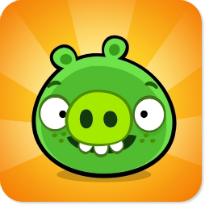
    Bad Piggies is a unique puzzle game from the makers of the hit game Angry Birds, that has players building contraptions that must carry the “piggies” to their destination.  Each level has a goal to reach, and players are given a set amount of material to use to build their creations. Players combine blocks, wheels, fans, and even TNT together to create mobile machines meant to traverse the length of the stage. While the main goal is to reach the destination at the end of the level, players earn more points by meeting certain requirements, like collecting star scrolls, reaching the end within a set time limit, or completing the level without using specific items in their contraptions.

  • Instagram

    Instagram is a fun tool for sharing classic or quirky looking photos instantly. The app has many different filter effects to choose from, allowing users to make their photos more unique and interesting. Instagram archives pictures like a blog space, where users can see the collection of all their photos, and can also follow photo streams of other users. Instagram can be linked to Twitter, Tumblr, Facebook and other social networking accounts, as well, with settings that allow users to select exactly where to post each photo. Captured photos can be saved to the device rather than shared, and accounts cana be set to private as to not publish photos openly to the web. While the simple interface makes Instagram easy enough to use for ages 6 and up, we only recommend allowing young children to use the app in junction with an account managed by a parent or guardian.

  • Pokémon GO

    Pokémon GO is an augmented reality (or more accurately, a GPS location-based) game for iPhone and Android mobile devices. Part of the popular Japanese media franchise, Pokémon GO puts the player in the role of a trainer who captures, trains, and battles Pokémon — “pocket monsters” — for sport. The augmented reality (AR) nature of Pokémon GO means that the game world is a player’s actual environment. Developed by Niantic, the studio formerly part of Google and responsible for the popular underground AR game Ingress, Pokémon GO uses a device’s GPS location and camera to place Pokémon in real world places, and Pokéstops and Gyms (where players power up, level up, and battle those creatures) over actual places of interest.

  • Minecraft

    Minecraft is an open-world game unlike any other. Players are placed in a borderless, randomly generated land with no supplies, directions, or objective. It is up to them to decide what to do and how to do it. Players collect materials from the world around them in order to ‘craft’ items and build whatever their mind can imagine. The concept is similar to playing with LEGOs, only the amount of blocks is limitless. 

  • Mathmateer

    Mathmateer is an iOS action game in which players build a rocket to maintain enough “hangtime” to solve a series of math problems. Players choose from problems involving money, numbers, time-telling, geometric shapes, and multiplication. The goal is to solve them as quickly as possible. The faster the equations are completed, the more points players will score. Bronze, silver, and gold medals are awarded for high scores. Mini-games are also available as a way to accumulate game money.

  • SimpleNote

    As the name would imply, SimpleNote is an easy-to-use note-taking app that allows users to create reminders and extended notes on their mobile devices, as well as from desktop computers. A cloud-based app, Simple Note’s content can be synced to any device, ensuring users will always have access to their notes. What separates SimpleNote from the basic “Notes” app on iOS devices, is the user’s ability to tag each note, allowing them to find content quickly without having to sift through pages of notes and reminders. Users can even tag friends via e-mail, or simply publish content to the web.