
Anxiety and Technology
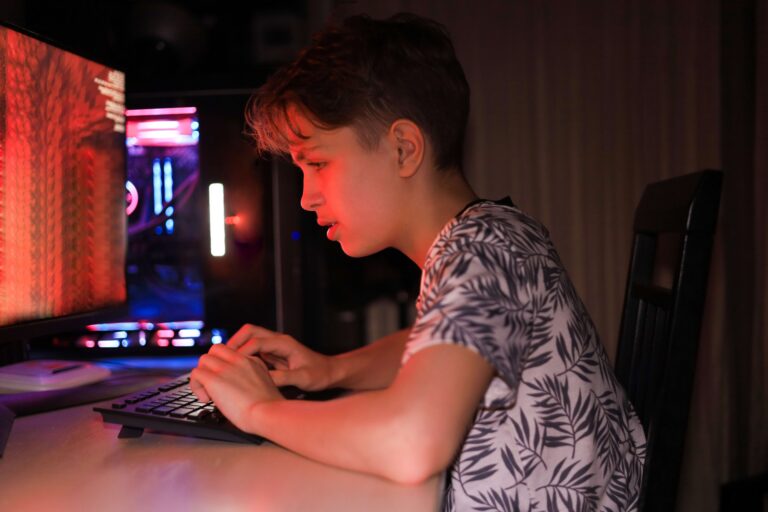
For anxious children, the benefits of technology are real but require more careful framing than for most diagnoses. Almost every positive use of a device carries some risk of becoming a tool for avoidance.
Part 1
Why Technology Is Different for Kids with Anxiety
If your child has an anxiety diagnosis, you already know the core picture. A nervous system calibrated toward threat, chronic worry that is difficult to control, and a powerful behavioral pull toward avoiding the situations that trigger fear. Childhood anxiety takes several forms, including generalized anxiety, social anxiety, separation anxiety, specific phobias, and school refusal. Each has a slightly different relationship with technology, but they share one mechanism that shapes everything that follows: avoidance.
Avoidance is the engine of anxiety. Every time a feared situation is bypassed, the anxiety associated with it grows rather than diminishes. Technology, for all its genuine uses, is also one of the most effective avoidance tools ever invented. A child can be completely absorbed in a device, looking calm and occupied, while a feared situation, such as a social gathering, a phone call, a homework assignment, or a medical concern, sits untouched and grows larger in the child’s mind.
What makes this complicated for parents is that the same technology can also be the thing that helps. Tyree’s video editing began as a solitary interest in the room he most felt like himself in. It became a bridge to competence, then to a classroom moment that did not require him to perform socially in the usual way, and then to a small group of peers who came to him for what he knew. Technology created the exposure, and it worked. The same device that can be a perfect avoidance tool for one anxious child can be the thing that finally opens a door for another. The difference often sits in whether the technology is leading somewhere or standing in for somewhere.
Many children without a formal anxiety diagnosis still experience significant worry, social discomfort, and avoidance patterns. Much of what follows applies to them as well.
|
What you see at home |
What’s happening in the brain |
Why tech engages it |
|---|---|---|
|
Prefers to stay home on devices rather than attend parties, practices, or casual hangouts, and seems visibly relieved when a plan is cancelled. |
Social and performance anxiety drive avoidance of unpredictable settings. Staying home with a device feels like relief, but each bypassed event tends to make the next one feel bigger rather than smaller. |
Devices make avoidance immediately comfortable and socially invisible. A child who is clearly occupied on a screen does not look like a child avoiding anything, which is part of why the pattern escapes notice. |
|
Texts, messages, or chats in games with peers for hours, but is reluctant to call them, see them in person, or speak up in class. |
Online communication removes the real-time demands that trigger social anxiety: facial expressions, pauses, tone of voice, the risk of being visibly nervous. For a socially anxious child this is a genuinely accessible doorway. |
Text and voice chat allow the child to compose, review, and pace themselves. That lower demand is a real asset when the goal is to build toward in-person contact, and a real cost when it becomes a permanent substitute. |
|
Develops deep interests and impressive skills through technology, such as editing, coding, drawing, music, or game-building. |
Anxious children often do their best thinking and learning in quiet, controlled conditions. Technology provides that environment, which is why the same child who struggles socially can build genuine competence on a screen. |
Digital tools reward patient, private practice and allow mastery to develop without an audience. When that mastery eventually produces something a peer admires, as it did for Tyree, the technology has done more than entertain. |
|
Researches feared topics online repeatedly, such as symptoms, illnesses, disasters, or worst-case scenarios, looking for reassurance that never quite arrives. |
Anxiety involves intolerance of uncertainty, and the internet appears to offer comprehensive information about any topic. The behavior feels productive and responsible while it is actually maintaining the anxiety. |
Search engines and content platforms are bottomless. Each search raises a new question, and the search for certainty teaches the brain that anxiety is resolved by more research rather than by tolerating the discomfort of not knowing. |
Part 2
What Technology Can Help With
For anxious children, the benefits of technology are real but require more careful framing than for most diagnoses. Almost every positive use of a device carries some risk of becoming a tool for avoidance. Keeping that question in mind is the thread that runs through this section.
1
Interest-Based Mastery as a Doorway to Connection
For anxious children, technology often produces the first adult-level competence they have, and that competence can become a bridge into peer relationships. Video editing, coding, digital art, music production, and game design all reward private practice, which is where many anxious children do their best work. When the skill eventually produces something visible to peers, as Tyree’s presentation did, the child is no longer meeting classmates from a position of social anxiety. They are meeting them as the person who knows how to do the thing. That shift changes what social contact feels like.
2
Re-engagement of the Reward System
Texting, messaging apps, and voice chat in games allow socially anxious children to maintain friendships and practice social interaction without the real-time demands of face-to-face conversation. For some children, this is the only accessible way to stay socially connected during the period when in-person contact feels impossible. The clinical goal is for digital communication to function as an entry point into relationships, not as a permanent replacement for them.
3
Interest-Based Online Communities
Anxious children who struggle in unstructured social settings often thrive in communities organized around a specific interest. A shared topic gives the child something to talk about, reduces the pressure to generate small talk, and lowers the cost of entry into a conversation. Communities focused on creative work, games, hobbies, or shared fandoms can be particularly valuable here. Adult awareness of which communities the child belongs to is important, because not every online space is a healthy one.
4
Organization and Predictability Tools
A significant portion of childhood anxiety is anticipatory: worry about what is coming next. Calendars, visual schedules, timer apps, and simple task tools can carry some of that cognitive load by making the future explicit and predictable. For a child who worries about forgetting something important, a reliable external system reduces the need to stay mentally vigilant about it, which over time reduces baseline anxiety.
5
Creative Outlets for Difficult Feelings
Anxious children often have more going on internally than they can put into conversation, particularly with an adult. Digital tools for writing, drawing, editing, and music-making give them a way to externalize what they are experiencing in a form that feels manageable. Expressive writing in particular has a meaningful evidence base in anxiety management, and the digital versions of it, from journaling apps to simple word processors, make the practice more accessible than paper typically does.
Part 3
What to Watch Out For
For anxious children, the cautions most worth naming on this page are the ones that look productive from the outside. These are patterns in which the child is actively using a tool, producing something, gathering information, or communicating, and yet the anxiety is being maintained or made worse. Because the behavior looks responsible, it often escapes notice.
Endless Revision and the Perfectionism Loop
Writing tools that offer unlimited revision, synonym suggestions, grammar feedback, and infinite undo can turn finishing a piece of work into an open-ended loop for perfectionistic anxious children. The child writes, rewrites, swaps words, and rewrites again, not because the work is actually improving but because submitting it would mean tolerating the discomfort of letting go of something imperfect. The tool is doing useful work each time. The problem is that the child is using its capacity to postpone the one thing anxiety cannot tolerate, which is being finished.
Research as Avoidance of the Task
For anxious children, particularly perfectionistic ones, gathering information can become a way of avoiding the work the information is supposed to support. A child assigned a short paper spends four hours finding sources, organizing notes, and reading background material, and then never quite gets to the writing. The research looks responsible and often earns praise, which makes this pattern especially hard to recognize. The question to ask is not whether the child is working, but whether the work they are doing is moving toward something finished or standing in for it.
Online Research as Anxiety Amplification
Anxious children who use search engines to find reassurance about feared topics, such as physical symptoms, illnesses, dangers, or catastrophic events, are using a self-defeating strategy. The web is infinitely deep, so the certainty the child is seeking is never fully available. Each search raises a new question, each result introduces a new worst case, and the child ends the session more anxious than when they started. For health anxiety in particular, repeated online research is one of the most reliable ways to make the problem worse.
Reassurance-Seeking Through Messaging
Digital communication enables reassurance-seeking at a scale and frequency that was not previously possible. A child can text a parent or friend for reassurance dozens of times a day, at any hour, and each response received reduces anxiety momentarily while reinforcing the behavior. Over time the child requires more reassurance to achieve the same relief, and their tolerance for uncertainty decreases rather than increases. Parents sometimes play an unintentional role in this pattern, particularly anxious parents, by encouraging or permitting their child to check in throughout the school day, respond to texts during class, or message for reassurance when the child should be focused on schoolwork or handling a moment of discomfort on their own. Parents should be aware that immediate reassurance, however natural and loving it feels, may exacerbate anxiety over time rather than relieve it, and may prevent the child from developing the self-soothing and autonomy skills that anxiety treatment specifically aims to build.
Part 4
Sources for Research and Additional Information
Health-Related Internet Use and Cyberchondria in Adolescents: Population-Based Cross-Sectional Survey
Jungmann, S.M., & Dessauer, E. (2025). Journal of Medical Internet Research.
https://www.jmir.org/2025/1/e65792
Parent and Child Emotion and Distress Responses Associated with Parental Accommodation of Child Anxiety Symptoms
Settipani, C.A., & Kendall, P.C.
https://pmc.ncbi.nlm.nih.gov/articles/PMC7282941
Social Media and Youth Mental Health: The U.S. Surgeon General’s Advisory
U.S. Surgeon General (2023).
https://www.hhs.gov/sites/default/files/sg-youth-mental-health-social-media-advisory.pdf
Flusterclux with Lynn Lyons: For Parents Who Worry (podcast)
Lyons, L., & Hutson, R.
The Anxious Generation: How the Great Rewiring of Childhood Is Causing an Epidemic of Mental Illness
Haidt, J. (2024). Penguin Press.
https://www.anxiousgeneration.com/book
Anxiety Resources (Family Resource Center)
Child Mind Institute.
Join our Newsletter!
More about Anxiety and Technology




Finding the Right Technology for Your Child
No single app, game, or platform is right for every neurodivergent child. That’s why Digitally Nutritious maintains a searchable database of technology guides designed specifically for neurodivergent kids and teens.
Each guide explains why a tool may be helpful, which skills it supports, what to watch out for, and how to use it intentionally.
The goal isn’t to find “more” technology—but to find better-fit technology that supports your child’s development, strengths, and long-term growth.