
Neurotechnologies and ADHD
Of all the diagnoses on this site, ADHD has the most neurotechnology research behind it. That’s promising, and it comes with real caveats.
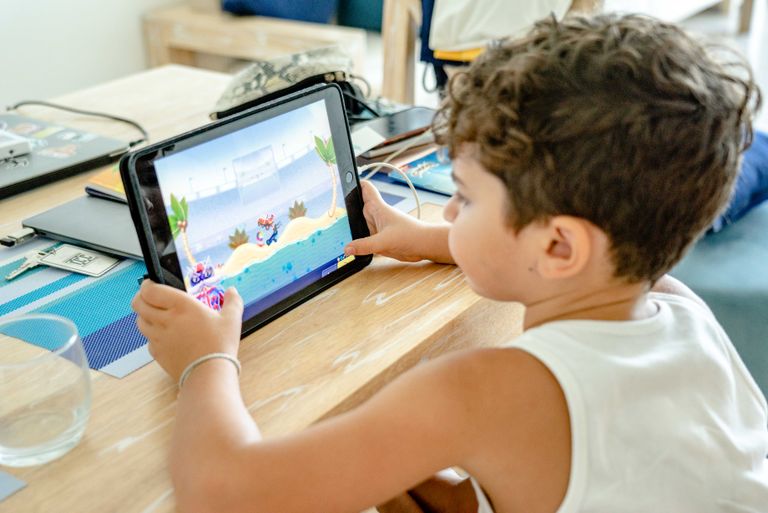
Screens attract children with ADHD thanks to their vivid images, sounds, colors, and engaging stories. This is why educators and mental health professionals have always believed that screen-based tools can be beneficial for kids with ADHD. The best neurotechnologies, which are specifically designed to assist children with ADHD in improving their attention and learning, reflect this approach. However, children can be picky; if an activity isn’t fun, they’ll avoid it and won’t benefit from it.
If your child has an ADHD diagnosis, you know the core picture: difficulties with attention, impulsivity, and hyperactivity, along with the executive functioning challenges that affect organization, time management, emotional regulation, and follow-through. ADHD is a brain-based condition that affects how children manage attention, motivation, and self-control. Research shows differences in brain networks that use chemicals like dopamine and norepinephrine, especially in areas that support executive functioning. This helps explain why children with ADHD can focus deeply on interesting tasks but struggle with things that feel boring or repetitive.
Neurotechnologies are a broad and rapidly evolving category and currently, most of the successful tools have been designed for children with ADHD. For the purposes of this page, the term neurotechnologies covers tools designed to support neurological functioning directly: neurofeedback, biofeedback, game-based digital therapeutics, virtual reality platforms, wearable physiological monitors, and digital medicines that have completed some level of clinical development. Of all the diagnostic categories on this site, ADHD has the most neurotechnology research behind it. This is the area where the technology is farthest along, the evidence base is most developed, and the first regulatory landmarks have already been reached.
In 2020, a game-based digital therapeutic for ADHD became the first prescription video game cleared by the FDA. This was a significant milestone, not just for ADHD but for the broader category of digital medicine. It demonstrated that a technology-based intervention could meet regulatory standards for clinical efficacy and opened the door to a generation of tools being developed in the same space. The pipeline of ADHD-focused neurotechnologies, including tools targeting sustained attention, working memory, emotional regulation, and impulsivity, is more active than for any other childhood diagnosis.
That is genuinely promising. It also means that families of children with ADHD are more likely than most to encounter marketing for neurotechnology tools, and more likely to be confronted with the gap between what is being researched and what is actually ready for clinical use. Understanding the difference is the most important thing this page can help you do.
A note on the evidence: the neurotechnology field for ADHD is more developed than for most diagnoses, but that also means the contested findings are better documented. What follows reflects the current state of the evidence, including where it is genuinely disputed.
|
What you see at home |
What’s happening in the brain |
Why screen time engages it |
|---|---|---|
|
Struggles with sustained attention during homework, reading, or any task that isn’t immediately engaging |
Attention regulation is impaired in ADHD at a neurological level. The brain’s attention networks, particularly those governing voluntary, sustained focus, are less efficiently coordinated. |
Neurofeedback and game-based digital therapeutics directly target attention networks, training the brain to sustain the electrical patterns associated with focused engagement. |
|
Has difficulty managing emotions, escalates quickly, struggles to calm down after frustration |
Emotional dysregulation in ADHD reflects impaired prefrontal control over the brain’s threat and arousal systems. The child isn’t choosing to escalate; the regulatory capacity isn’t reliably available. |
Biofeedback tools that train heart rate variability and physiological arousal give children a concrete, visible signal of their own internal state, making regulation strategies something they can actually apply in the moment. |
|
Forgets steps, loses track of what they were doing, can’t hold information in mind while completing multi-part tasks |
Working memory deficits are among the most consistent features of ADHD. The brain’s ability to hold and manipulate information while acting on it is reduced. |
Computerized working memory training programs use game-like formats to systematically exercise working memory circuits, with some evidence of improvement on trained tasks. |
|
Responds well to games and challenges but disengages from conventional therapeutic or academic formats |
The ADHD brain requires stimulation, immediate feedback, and clear reward signals to sustain engagement. Conventional formats, including many therapy and school tasks, don’t provide these reliably. |
Neurotechnology tools designed for ADHD, including game-based digital therapeutics, are built around the engagement requirements of the ADHD brain, making the intervention itself more accessible. |
Part 2
What Screen Time Can Help With
ADHD has more neurotechnology research behind it than any other childhood diagnosis on this site. Several tools have moved well beyond early-stage feasibility studies into genuine clinical territory. These are the areas where the evidence is strong enough to discuss meaningfully with a clinician.
1
Game-Based Digital Therapeutics
The most significant development in ADHD neurotechnology in recent years is the FDA clearance of a game-based digital therapeutic specifically targeting attention in children with ADHD. The pivotal clinical trials involved over 600 children and found that after four weeks of use, more than a third showed no measurable attention deficit on at least one measure, and about two-thirds of parents reported improvement after two months. This was the first prescription video game treatment cleared by the FDA, and it represents a meaningful shift: a technology-based intervention has now met the regulatory bar required of a medical treatment. It is a prescription product requiring clinical oversight, not an app to download independently. Its significance lies partly in what it demonstrates about the category: that game-based digital therapeutics for ADHD can be developed and validated to clinical standards.
2
Neurofeedback
Neurofeedback for ADHD has been studied for over three decades, longer than almost any other neurotechnology intervention. Large meta-analyses have shown significant effects on attention and hyperactivity. The picture became more complicated in 2025 when a large rigorous trial found no significant benefit on blinded outcome measures, bringing the field into genuine dispute. The current clinical consensus is that neurofeedback may be a useful option for families who cannot access or tolerate medication, or as an adjunct to other treatment, but it should not be positioned as a first-line or stand-alone treatment. Parents considering neurofeedback should go in with clear-eyed expectations and a clinician’s guidance.
3
Biofeedback for Emotional Regulation Support
Biofeedback tools that train heart rate variability, skin conductance, and other physiological markers of arousal have a reasonably strong evidence base for reducing anxiety and improving emotional regulation. For children with ADHD who experience significant emotional dysregulation alongside attention difficulties, these tools offer a way to externalize internal physiological states, making them visible and workable. Game-based biofeedback platforms that integrate physiological feedback into engaging game mechanics have shown reductions in emotional outbursts and improvements in regulation in children with ADHD. The evidence here is among the more solid in the neurotechnology category.
4
Working Memory Training
Computerized working memory training programs use game-like interfaces to systematically challenge the working memory circuits that are often impaired in ADHD. The evidence supporting improvements on trained tasks is fairly well established. The more important and debated issue is whether these improvements generalize: do gains on training tasks transfer to real-world functioning in school and daily life? Research shows that near-transfer effects are documented, but far-transfer to daily functioning remains inconsistent. Parents investing in working memory training should understand this distinction and not expect improvements on trained tasks to automatically lead to better homework completion or classroom performance.
5
Virtual Reality Tools
VR-based platforms are increasingly being developed and studied for ADHD, particularly for assessment and for social and emotional skills training. VR environments allow clinicians to simulate real-world contexts, such as classrooms or social situations, in a controlled way, enabling assessment and intervention that would otherwise be difficult to deliver. Early research on VR assessment tools for ADHD shows promising accuracy in detecting attention difficulties in simulated environments. VR-based intervention tools for ADHD are at an earlier stage of development, but the pipeline is active, and the rationale is sound.
Part 3
What to Watch Out For
The neurotechnology landscape for ADHD is more developed than for most diagnoses, which also means the marketing is more sophisticated and the gap between promising research and ready-for-clinical-use products is easier to miss. Many factors impact the effectiveness of neurotechnologies, including:
- The child’s motivation and sustained effort
- Parental supervision
- The use of generalization and metacognitive strategies that help translate screen-based learning into real-world skills
There is excellent data to suggest that these neurotechnologies can be helpful for kids with ADHD, but they should be considered to be one tool in the toolbox.
The Evidence Base Is Contested, Not Settled
Even for ADHD, where the neurotechnology research base is the most developed of any childhood diagnosis, key findings are genuinely disputed. The most rigorous recent trial of neurofeedback found no significant benefit on blinded outcome measures, directly challenging decades of earlier positive findings. Working memory training shows improvement on trained tasks but inconsistent generalization to real-world functioning. Parents who encounter marketing that presents these tools as established treatments should know that the clinical picture is more complicated. The question to ask is not just ‘has this been studied?’ but ‘what did the most rigorous studies actually find?’
Digital Therapeutics Require Clinical Oversight
FDA-cleared digital therapeutics for ADHD are prescription-grade interventions, not apps to use independently. Families are discouraged from accessing these tools without the clinical context needed to interpret results, adjust use, or integrate them with other interventions. Using a digital therapeutic as a standalone solution creates the same risks as using medication without medical supervision. Clinicians should be the entry point for these tools, not the app store.
Gaming-Based Training and the Generalization Problem
Several cognitive training programs for ADHD use game-like formats to deliver working memory and attention training. While improvements on trained tasks are relatively well established, the generalization of those gains to real-world functioning, which is the outcome that actually matters for daily life, is inconsistent and often absent. A child who performs better on a working memory training task may not automatically manage their homework, their backpack, or their morning routine any better. Parents should understand the difference between improved performance on a training task and improved functioning in daily life, and recognize that a conscious effort must be made to generalize neurotechnology training to real-world skills.
Wearable Monitoring Devices: Privacy and Stigma
Emerging wearable technologies designed to monitor attention and cognitive state in children with ADHD raise concerns beyond efficacy. Data collected by these devices may be stored, shared, or used in ways that are not fully transparent to families. There are also meaningful concerns about the stigma of wearing visible neurotechnology in school or social settings, and about the psychological effect on a child who is constantly aware that their attention is being monitored. Child assent and genuine understanding of data use should be part of any decision to adopt these tools.
The Risk of a Deficit-Focused Identity
The increasing availability of neurotechnology tools creates a risk of reinforcing a deficit-centered view of the child. Constant monitoring and optimization of neurological performance can embed the understanding that the child is neurologically broken rather than differently wired. This framing deserves careful attention, particularly when these tools are introduced to young children whose self-concept is still forming. The goal of any neurotechnology intervention should be to support the child’s development and independence, not to create ongoing dependence on monitoring tools.
Cost and Equity
Neurotechnology interventions for ADHD, including neurofeedback, working memory training systems, and biofeedback devices, carry high costs that are rarely covered by insurance. Families who invest substantial financial resources in these tools based on promising but preliminary evidence may experience significant disappointment if benefits do not materialize at the scale marketed. Clinicians should help families evaluate these decisions with realistic expectations and honest guidance about where specific tools sit in the evidence pipeline.
Part 4
Sources for Research and Additional Information
A Novel Digital Intervention for Actively Reducing Severity of Paediatric ADHD (STARS-ADHD): A Randomised Controlled Trial (EndeavorRx Pivotal Trial)
Kollins, S.H., DeLoss, D.J., Cañadas, E., Lutz, J., Findling, R.L., Keefe, R.S.E., Epstein, J.N., Cutler, A.J., & Faraone, S.V. (2020). Lancet Digital Health, 2(4), e168–e178.
https://www.thelancet.com/journals/landig/article/PIIS2589-7500(20)30017-0/fulltext
Meta-Analysis of the Efficacy of Digital Therapies in Children with Attention-Deficit Hyperactivity Disorder
He, F., Qi, Y., Zhou, Y., Cao, A., Yue, X., Fang, S., & Zheng, Y. (2023). Frontiers in Psychiatry, 16.
https://www.frontiersin.org/journals/psychiatry/articles/10.3389/fpsyt.2023.1054831/full
An Open-Label Study of a Wearable Device Targeting ADHD, Executive Function, and Academic Performance (Revibe Connect)
Weiss, M.D., Brancaccio, R., Ayearst, L., & the Revibe research team (2023). Brain Sciences, 13(12), 1728.
https://pmc.ncbi.nlm.nih.gov/articles/PMC10741604
Wearables in ADHD: Monitoring and Intervention — Where Are We Now?
MDPI Diagnostics (September 2025).
https://pmc.ncbi.nlm.nih.gov/articles/PMC12468562
Digital Therapeutics for ADHD: Neurotechnology Treatments for Children (Webinar)
Kulman, R. ADDitude Magazine (August 2023).
https://www.additudemag.com/webinar/neurotechnology-options-adhd-treatment-children/
Join our Newsletter!
More about Neurotechnologies and ADHD





Finding the Right Technology for Your Child
No single app, game, or platform is right for every neurodivergent child. That’s why Digitally Nutritious maintains a searchable database of technology guides designed specifically for neurodivergent kids and teens.
Each guide explains why a tool may be helpful, which skills it supports, what to watch out for, and how to use it intentionally.
The goal isn’t to find “more” technology—but to find better-fit technology that supports your child’s development, strengths, and long-term growth.