Our Recommendation Methodology
Digitally Nutritious helps parents, teachers, and clinicians make better decisions about the apps and technologies that neurodivergent children use every day. Every tool on this site has been included because we believe it can help a specific kind of child in a specific kind of way. This page explains the standard we use to make those recommendations.
Most apps for neurodivergent children have never been studied directly, and most never will be. Independent randomized trials of consumer apps are expensive, slow, and rare — by the time a study is funded, completed, and published, the app has often been redesigned. A directory that recommended only apps with their own published efficacy research would have almost nothing to say, and would give parents and providers worse guidance than a directory that thinks carefully about what those apps actually do.
So the substantive evidence base for the apps we recommend is not the research on the app itself. It is the research on the techniques and skills the app is designed to develop — and on whether developing those techniques and skills actually helps neurodivergent children and the people who support them.
This is not a fallback. It is the appropriate standard for recommendations in this space, and it rests on a substantial body of peer-reviewed science. The research on mindfulness for childhood anxiety is extensive. The research on working memory training for children with ADHD is well established. The research on graphic organizers for students with learning disabilities is one of the better-developed bodies of evidence in special education. The research on parent coaching — showing that when caregivers develop emotional regulation, planning, and behavioral management skills, children’s outcomes meaningfully improve — has been replicated across decades. None of this research was conducted on the apps we recommend. All of it is directly relevant to whether those apps have a defensible basis for what they claim to do.
What goes into a recommendation
Each tool we cover is assessed across four sources of information, weighted together rather than treated as a checklist.
Research on what the app is designed to develop
The primary basis for almost every recommendation on the site. We identify what the app targets — mindfulness, working memory, time awareness, habit formation, parent regulation, graphic organization, and so on — and examine the peer-reviewed research on whether developing those things helps neurodivergent children. Each tool’s evidence box names specific studies wherever possible.
Direct studies of the app, when they exist
A small number of apps we cover have been studied directly — IXL Math has a Johns Hopkins randomized trial, BrainPOP has effectiveness research meeting ESSA Level 3 standards, Kidspiration has been tested with elementary students with learning disabilities. Where direct evidence exists, we describe it. Where it does not, we rely on the broader research literature rather than on speculation or marketing language.
Prior review work
Many tools we cover were previously reviewed by Learning Works for Kids, where our founder Dr. Randy Kulman and his team spent more than two decades testing digital tools with children and families. That accumulated clinical and educational judgment helps us distinguish thoughtfully-designed tools from tools that simply use the right vocabulary.
Real-world reception and fit
App Store ratings, review themes, and clinician endorsements give us a signal about whether a tool actually engages the children and families it is designed for. We weight this carefully — it is not research — but a tool that no neurodivergent child wants to use is not useful, and a tool that families return to month after month tells us something meaningful. We also pay close attention to fit: a recommendation is for a particular kind of child in a particular kind of situation, not a generic endorsement.
What we don’t yet do
Digitally Nutritious is a small nonprofit in its early stages. We do not yet have the capacity to conduct hands-on testing of every app with children in our community, run longitudinal outcome studies, or independently verify every developer claim. Building that capacity is a core part of our long-term mission. Until we get there, we rely on the sources above to make the best informed recommendations we can.
Help us improve
If you have used a tool we cover and want to share what worked or didn’t, if you are a clinician or educator with experience to add, or if you are a developer whose product appears here and would like to share research, internal data, or expert advisor information, please reach out. Our recommendations get better every time we hear from you.
Join our Newsletter!
More about Neurotechnologies and Processing Disorders




Finding the Right Technology for Your Child
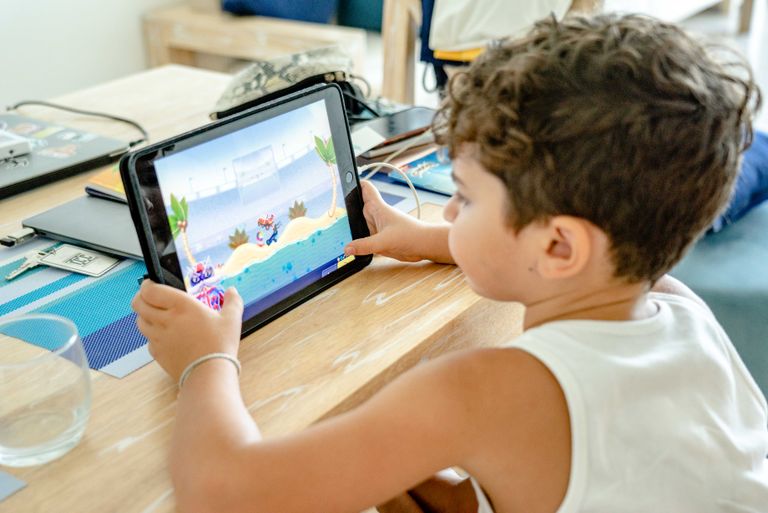
No single app, game, or platform is right for every neurodivergent child. That’s why Digitally Nutritious maintains a searchable database of technology guides designed specifically for neurodivergent kids and teens.
Each guide explains why a tool may be helpful, which skills it supports, what to watch out for, and how to use it intentionally.
The goal isn’t to find “more” technology—but to find better-fit technology that supports your child’s development, strengths, and long-term growth.