
Whole Play: Combining Screen Time with Traditional Play
Did you know that one of the top health-related worries for parents around the world is children’s screen time?
Parents in Australia report it as their number one concern. American and European parents say similar things. If you spend any time talking with families, you hear the same anxiety:
Too much gaming. Too much YouTube. Too much phone time.
Parents often ask a very direct question:
“How much screen time is healthy for kids?”
And yes—some of that concern is justified.
The addition of Internet Gaming Disorder to the DSM-5 helped formalize what many parents and clinicians were already seeing: a small number of kids truly struggle with compulsive or addictive use of screens.
But here’s the part that often gets lost.
A careful look at the data suggests that only a small percentage of kids—maybe around 3%—show signs consistent with video game addiction. Another 5–10% may show problematic use that interferes with sleep, school, or relationships. Those are real concerns, and those families deserve support and, at times, professional help.
But what about the other 85–90% of kids who love screens, use them a lot, but are not clinically impaired?
Many of those children are still overly involved with screens. This may not reach the level of a psychiatric diagnosis. However, it still has important implications. Most notably, screen time on its own keeps kids from opportunities to learn, socialize, explore, create, and experience their world.
Screen time—because it is so alluring—displaces many activities, such as the physical, social, creative, and free play that make up a balanced “play diet.” Too much screen play is like empty calories in a child’s food diet. It might not be harmful in itself, but it can leave a child with little appetite for healthier types of play.
Let’s not forget that screen time can also be a powerful tool for growth and development. For many children—including many neurodivergent children—screens are a source of learning, regulation, social connection, and competence.
So instead of only asking,
“How do I reduce screen time?”
I often encourage parents to ask,
“How do I use screen time better?”
That’s where the idea of Whole Play comes in.
Inviting Technology to the Table (Not Letting It Ruin the Meal)
At Digitally Nutritious, our team started using the term “Whole Play” to describe a simple idea: What might happen if kids combine their screen play with other forms of play?
Whole Play combines screen-based activities with:
- physical activity
- social interaction
- creative and unstructured play
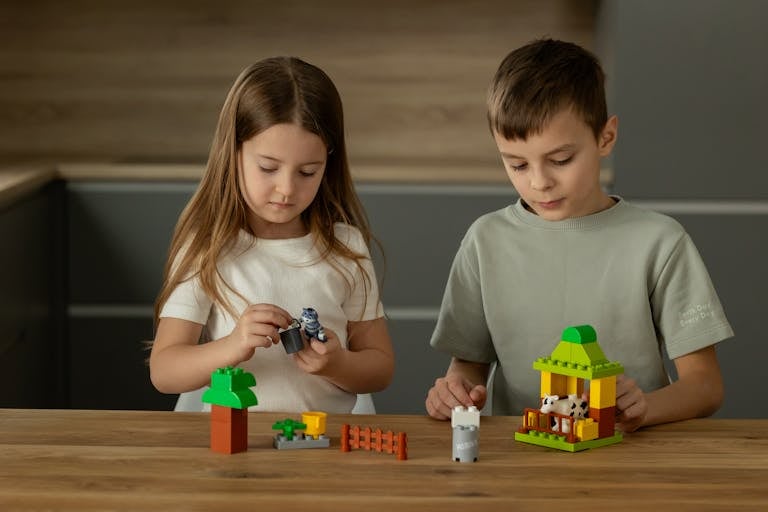
- building and constructive play
- problem-solving and academic learning
Whole Play occurs when digital play is intentionally combined or integrated with physical, social, and creative activities so that screens support development rather than dominate it.
Think of it less as less screen time and more as better-balanced play.
For neurodivergent kids—especially those with ADHD, learning differences, autism, or anxiety—digital play can be a powerful doorway. It can motivate effort, build confidence, and create engagement that’s sometimes harder to spark offline.
The Whole Grain Analogy
The idea of Whole Play came from the world of nutrition.
Food experts often recommend whole grains over refined grains because whole grains contain the bran, germ, and endosperm—all parts working together to provide steady energy and better health benefits.
This combination offers a range of health benefits, including the breakdown of starch into glucose, maintenance of steady blood sugar levels, lower cholesterol, healthy digestion, and prevention of blood clots and cancer. While I can’t argue that combining digital, screen-based play with other activities (Whole Play) will prevent diseases, there is evidence that complex play improves social and emotional learning (SEL) and executive functions.
Digital play alone can be like dessert, albeit with some nutritional value.
However, when screen-based play is combined with other forms of play, the results may be both fun and highly nutritious.
Whole Play leverages the allure of digital play to encourage other forms of healthy play, such as physical activity, social and collaborative opportunities, creative and unstructured play, constructive and building play, and problem-solving. Because Whole Play involves more than technology alone, it can reduce 21st-century children’s reliance on screens for play, entertainment, and virtually everything else.
If we leverage the appeal of screens to encourage movement, creativity, and real-world engagement, we can shift the balance.
A Pokémon game can lead to drawing characters.
A Minecraft build can lead to an interest in architecture.
A VR game such as Supernatural can lead to vigorous exercise.
A YouTube science video can lead to backyard experiments.
Using a cell phone to take pictures (not to text friends) during a hike can result in sharing an interest in nature.
These are examples of Whole Play in action.
Whole Play, Whole Communication
One of the advantages of facilitating Whole Play with your kids is that it opens the door to better communication about their use of digital media and technology. Rather than every conversation being about limiting or restricting access to technology, you can talk about how they can use technology in more productive ways in their lives.
Technology doesn’t have to be the dominant feature of what they do. It can be a tool that enriches experiences, supports learning, and enhances creativity and problem-solving.
And because Whole Play involves other activities, it helps children develop a healthier play diet. It can get them outside and into nature more, help them be more physically active, and open them up to interests beyond their screens.