
Overview
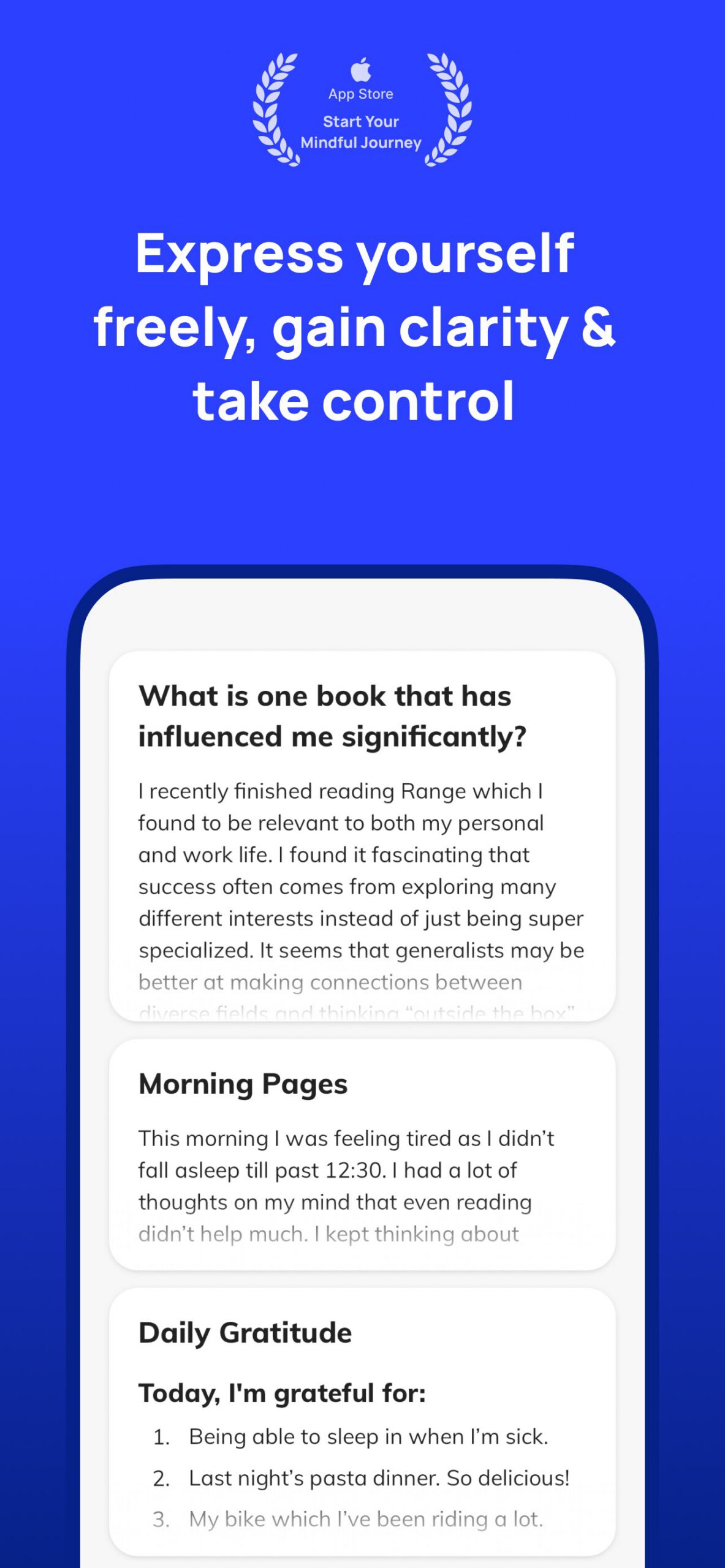
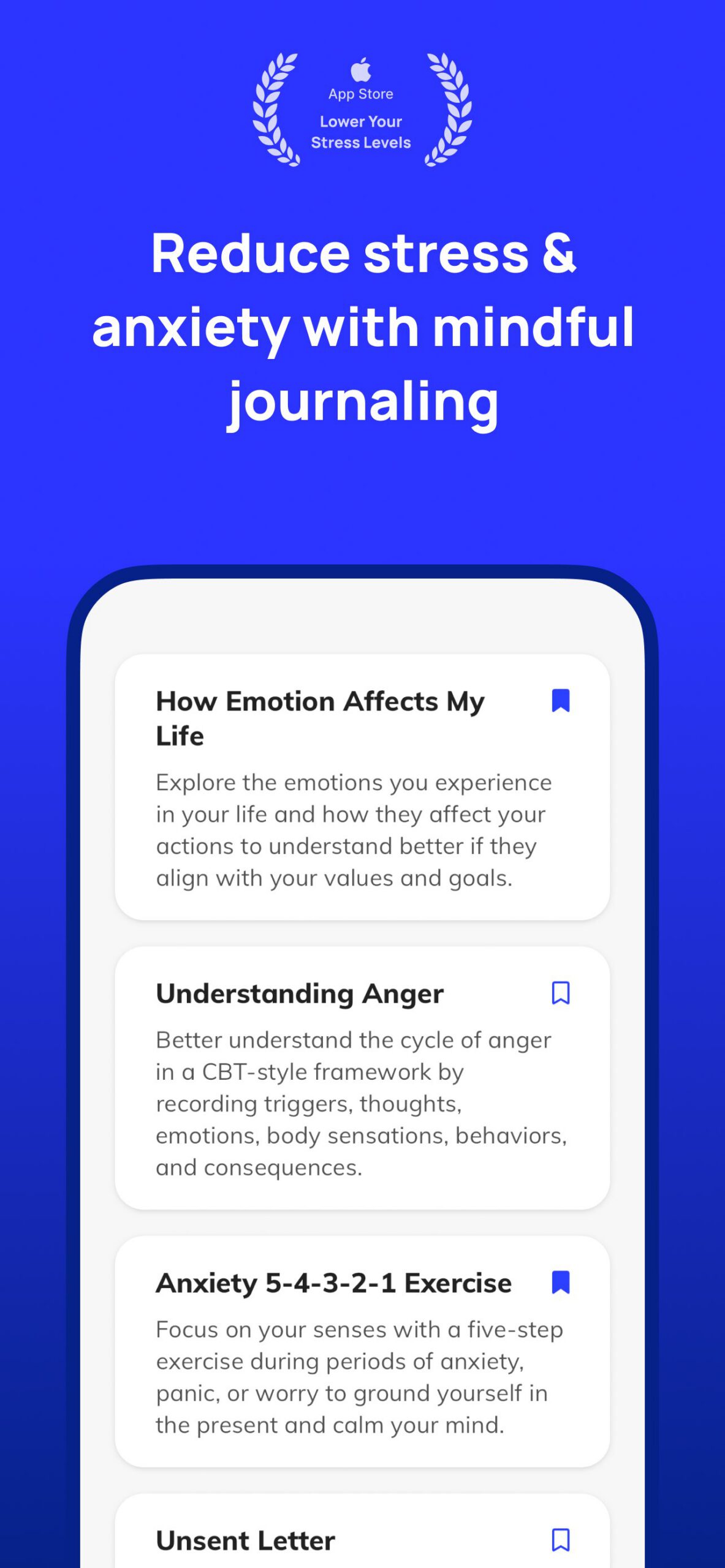
Clearful is a digital journal made by Maria Golikova and Jeffrey Bunn, a husband-and-wife team based in Vancouver who previously built the meal-planning app Mealime. Since its 2020 launch, Clearful has been named an Editors’ Choice and App of the Day in Apple’s App Store. The app pairs a clean, distraction-free writing screen with a library of more than 400 guided journals: a daily question called Discover Daily, open-ended prompts, and fill-in templates with names like “Minimalist Stress Log,” “Daily Gratitude,” and “Anxiety 5-4-3-2-1.” A feature called Rediscover resurfaces old entries from one month, six months, or a year ago, and streaks and reminders help build a daily or weekly habit.
The free version is generous: unlimited entries, many prompts and templates, Face ID or Touch ID lock, and no ads. Clearful Pro adds photos, more guided journals, password-locked entries, custom templates, and AI-generated Reviews that summarize a week, month, or year of writing. Clearful is designed and marketed for adults, so caregivers should plan to steer younger users toward the right templates.

Who is this best for?
Clearful is best for teens and older tweens with anxiety, depression, or big, fast-moving emotions who are comfortable writing and want a private place to put their thoughts. For anxious kids, writing worries down gives those worries somewhere to go besides around and around in their heads, and research shows it can help before stressful events like tests. For kids with depression, short expressive writing sessions and gratitude lists have modest but real research support. For kids who struggle with emotional regulation, journaling after a blowup offers a way to name what happened once they are calm. Clearful works best as one part of a larger plan that includes a trusted adult and, when needed, a therapist. It is a poor fit for young children, reluctant writers, and anyone in crisis.
Neurodivergencies
The sections below explain why Clearful’s features are a good match for each neurodivergency and offer practical guidance for caregivers and clinicians on how to use it effectively.
Why Clearful helps
Anxiety runs on worry that loops. A child replays the upcoming presentation, the friend who didn’t text back, the test on Friday, and each pass makes the worry feel bigger. Writing it down interrupts the loop. In a 2011 study published in Science, University of Chicago researchers Gerardo Ramirez and Sian Beilock had ninth graders spend 10 minutes writing about their worries right before a final biology exam. For students who wrote about their worries, test anxiety no longer predicted a lower grade. A 2022 meta-analysis of 31 randomized trials by Lin Guo in the British Journal of Clinical Psychology found that expressive writing produced a small but lasting drop in symptoms of anxiety, depression, and stress, with benefits that showed up at follow-up rather than right away. The effect held whether people wrote on paper or on a screen.
Clearful makes the habit easier to keep. It lives on the phone a teen already carries, the writing screen is quiet and ad-free, and templates like “Minimalist Stress Log” and “Anxiety 5-4-3-2-1” give structure to a child who finds a blank page intimidating. The Discover Daily question also offers a predictable, low-stakes place to start each day.
How to use Clearful for Anxiety
- Schedule a “worry window.” Set a Clearful reminder for the same time each day, ideally late afternoon rather than bedtime, and have the child write down worries for about 10 minutes. When a worry pops up at another time, the child can park it with “that goes in the journal later.”
- Write before the hard thing. Before a test, a presentation, or a doctor’s appointment, a 10-minute entry about what feels scary can free up the mental space anxiety was eating. Teachers can offer this before exams, on paper or on a device.
- Start with a template, not a blank page. Search the Library for “Anxiety 5-4-3-2-1” and the stress templates. Structured prompts are easier for anxious kids to start and harder to turn into a rambling spiral.
- End each entry with one next step. Add a closing line such as “One thing I can do about this is…” This keeps the writing pointed toward action instead of becoming another way to rehearse the fear.
- Watch for rereading as reassurance. If the child scrolls back through old worry entries again and again to check that things turned out fine, gently name it. Rereading for comfort is the same reassurance cycle that keeps anxiety going.
- Don’t let entries become a perfectionism project. Remind perfectionistic kids that nobody grades a journal. Typos stay, and an entry is done when the timer ends.
Why Clearful helps
Depression narrows thinking. Low mood and negative self-talk crowd out everything else, and many depressed teens can’t or won’t say out loud what they feel. A private journal gives those thoughts somewhere to go. In a randomized trial with college students who had a history of depression, Eva-Maria Gortner, Stephanie Rude, and James Pennebaker (2006) found that three days of expressive writing lowered depressive symptoms six months later for students who tended to bottle up their emotions, and the benefit came from a reduction in brooding. Gratitude writing has support with younger kids too. In a study of 221 sixth and seventh graders, Jeffrey Froh and colleagues (2008) found that listing up to five things to be grateful for each day for two weeks led to more optimism, higher life satisfaction, and less negative emotion, with school satisfaction still higher three weeks later.
Clearful puts both practices a tap away through its gratitude templates and daily questions. Rediscover can also help. Seeing an entry from a hard month that has since passed is concrete proof that bad stretches don’t last forever. The effects are modest, and the journal should support treatment rather than stand in for it.
How to use Clearful for Depression
- Keep entries short and doable. A depressed teen may not have the energy for a long entry. Three sentences count. The Discover Daily question or a five-minute gratitude template is plenty.
- Pair hard writing with gratitude. After writing about something painful, have the child add three good things from the day, even small ones like a good lunch or a funny video.
- Choose weekly streaks over daily ones. Clearful can track daily or weekly streaks. A broken daily streak can feel like one more failure, while a weekly streak leaves room for bad days.
- Manage Rediscover. Old entries can lift mood or drag a teen back into a dark stretch. Any entry can be hidden from Rediscover through its details menu, so show the teen how to do this.
- Use the journal to open conversations, not replace them. Invite (never require) the teen to share an entry or a theme with a parent, counselor, or therapist. Clearful can export single entries as a PDF, which makes it easy to bring something to a session.
- Keep journaling out of the middle of the night. Set reminders for daytime or early evening. Late-night phone use cuts into sleep, and poor sleep makes depression worse.
Why Clearful helps
Kids with emotional dysregulation feel things fast and big. A teacher’s correction, a lost game, or a sibling’s teasing can take them from calm to furious or tearful in seconds, and in that moment no amount of reasoning gets through. Once the storm passes, writing gives them a way to make sense of what happened. Brain imaging research from UCLA (Lieberman and colleagues, 2007) found that putting feelings into words, which psychologists call affect labeling, reduced activity in the amygdala, the brain’s alarm center, and increased activity in a part of the prefrontal cortex involved in emotional control. A 2015 meta-analysis of 21 expressive writing studies with 10- to 18-year-olds (Travagin, Margola, and Revenson) found small but significant improvements in emotional distress and problem behavior.
Clearful supports this kind of after-the-fact reflection with a calm, private space, templates like the “Outsider Perspective Test” that ask the writer to look at a situation from a step back, and a running record that can reveal, over several weeks, which situations tend to set the child off. For kids prone to rejection sensitive dysphoria, the journal is a place to vent with no audience, which an angry text or post always has.
How to use Clearful for Behavioral and Emotional Problems
- Write after the storm, not during it. Asking a dysregulated child to journal mid-meltdown will feel like a punishment. Wait until they are calm, then offer the journal as a way to sort out what happened.
- Never assign journaling as a consequence. Writing that’s handed out as punishment becomes one more battle. Keep it voluntary and separate from discipline.
- Use a simple three-part structure. What happened? What did I feel? What could I try next time? Naming the feeling is the step that matters most. With Pro, a parent or clinician can save these three questions as a custom template so the child doesn’t have to remember them.
- Journal before posting. For kids who are sensitive to criticism, set a household rule: when something online stings, write about it in Clearful first and wait an hour before responding anywhere else.
- Look for patterns together. After a few weeks, and only with the child’s permission, use Clearful’s search to find words like “unfair” or “angry” and talk about which situations come up again and again.
- Protect the privacy that makes it work. A journal that gets read without permission stops being honest. Agree up front on what, if anything, gets shared.
Limitations and Things to Watch For
Clearful was built for adults. Its 4+ and 3+ store ratings mean it contains no objectionable content, not that it was designed for children. The prompt library includes pregnancy, relationship, and work journals alongside the gratitude and anxiety templates, and there are no parental controls or teen settings. Younger users will need help finding prompts that fit their lives. Clearful Pro includes AI-powered Reviews that read a user’s entries and generate weekly, monthly, and yearly reports with sections on challenges, the people in the user’s life, and their “state of mind.” These are one-way summaries rather than a chatbot, so they carry fewer of the risks that come with conversational AI. Still, a depressed or anxious teen could receive a polished, authoritative-looking report on their worst month, and AI summaries can misread tone or overstate a pattern. Clearful’s own help page says the reviews support reflection and do not replace professional care. Its help pages also don’t name the AI model behind the reviews. Families who would rather keep a child’s private writing away from AI can stay on the free plan. Clearful is not a safety tool. Nobody monitors entries, and nothing in the app alerts an adult if a child writes about hopelessness or self-harm. Make sure the child knows which adults they can talk to. For some kids, writing about the same worry or hurt every day deepens the groove rather than easing it. If entries are getting longer, darker, and more repetitive, or the child seems worse after writing, scale back and talk with their clinician. Finally, Pro is a recurring subscription. Some App Store listings show higher tiers ($14.99 monthly or $89.99 yearly), so check the price before approving a purchase, and turn off auto-renew if the child is only trying it. On iPhone, Apple’s Journaling Suggestions feature can pull places visited, photos, and people the child has been in contact with into entries; consider leaving it off for younger teens.
Bottom Line
Clearful is a polished, private journaling app, and its free version is strong enough that most families will never need to pay. For teens and older tweens with anxiety, depression, or intense emotions, it offers a quiet place to get thoughts out of their heads, backed by research showing that expressive and gratitude writing produce small but real gains in mood and well-being. Its guided templates take the pressure off a blank page, and its Face ID lock and ad-free design respect a teen’s privacy. Clearful was built for adults, though, so caregivers will need to help younger users find the right prompts, think carefully before turning on Pro’s AI Reviews, and keep an eye out for journaling that turns into rumination. Used as one piece of a plan that includes trusted adults and, when needed, professional care, Clearful gives a teen a private, free way to practice putting hard feelings into words.
Related Guides









Join our Newsletter!
Related Articles