
Impulse – Brain Training
https://brainimpulse.me/
Overview
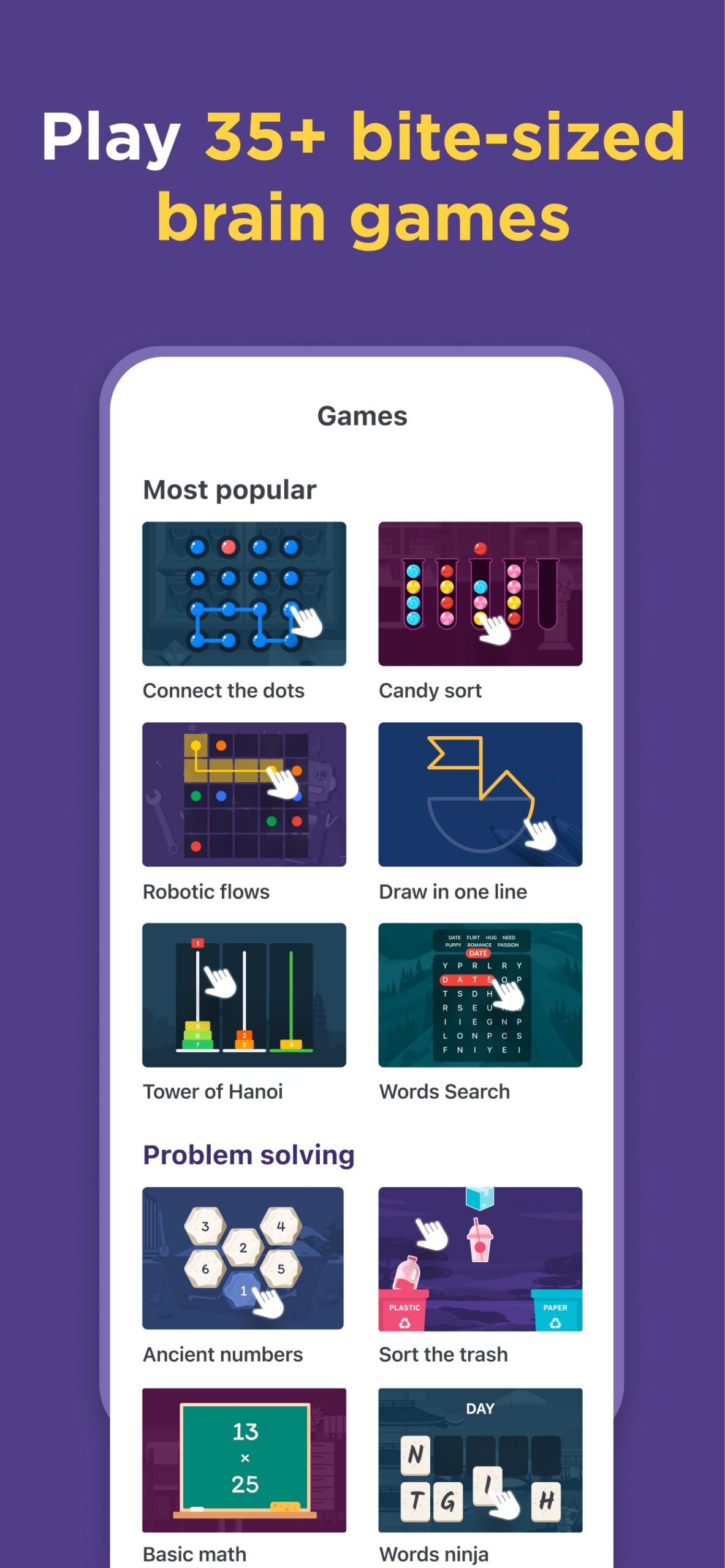
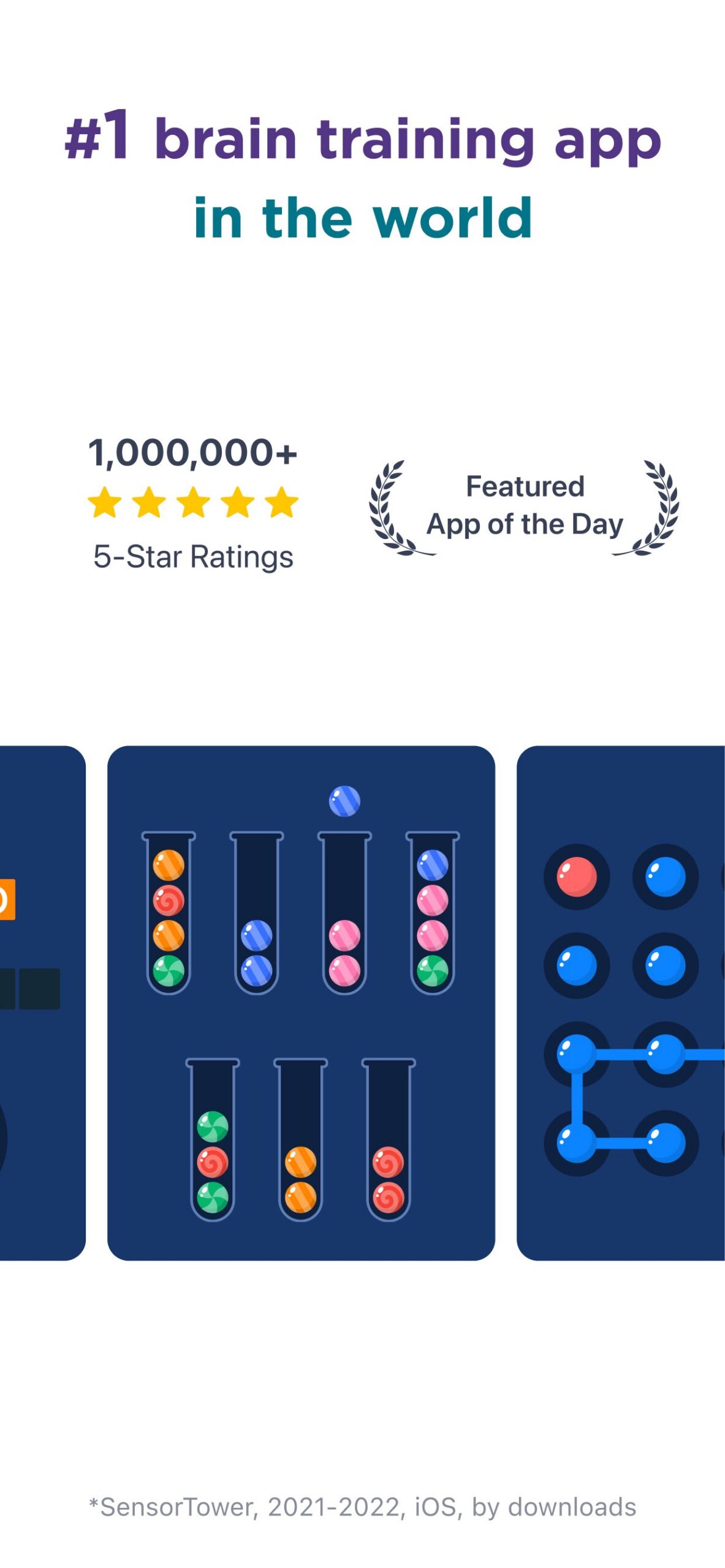
Impulse is a brain training app developed by GMRD Apps Limited that has accumulated over 100 million downloads worldwide and a 4.7-star rating from approximately 829,000 App Store reviewers — making it one of the most widely used cognitive training applications available. The app offers a personalized daily training plan built around a library of games targeting working memory, attention, processing speed, mental math, and problem-solving. It also includes a self-discovery layer — personality tests, IQ-adjacent assessments, and emotional intelligence tools — alongside performance tracking with longitudinal progress data.
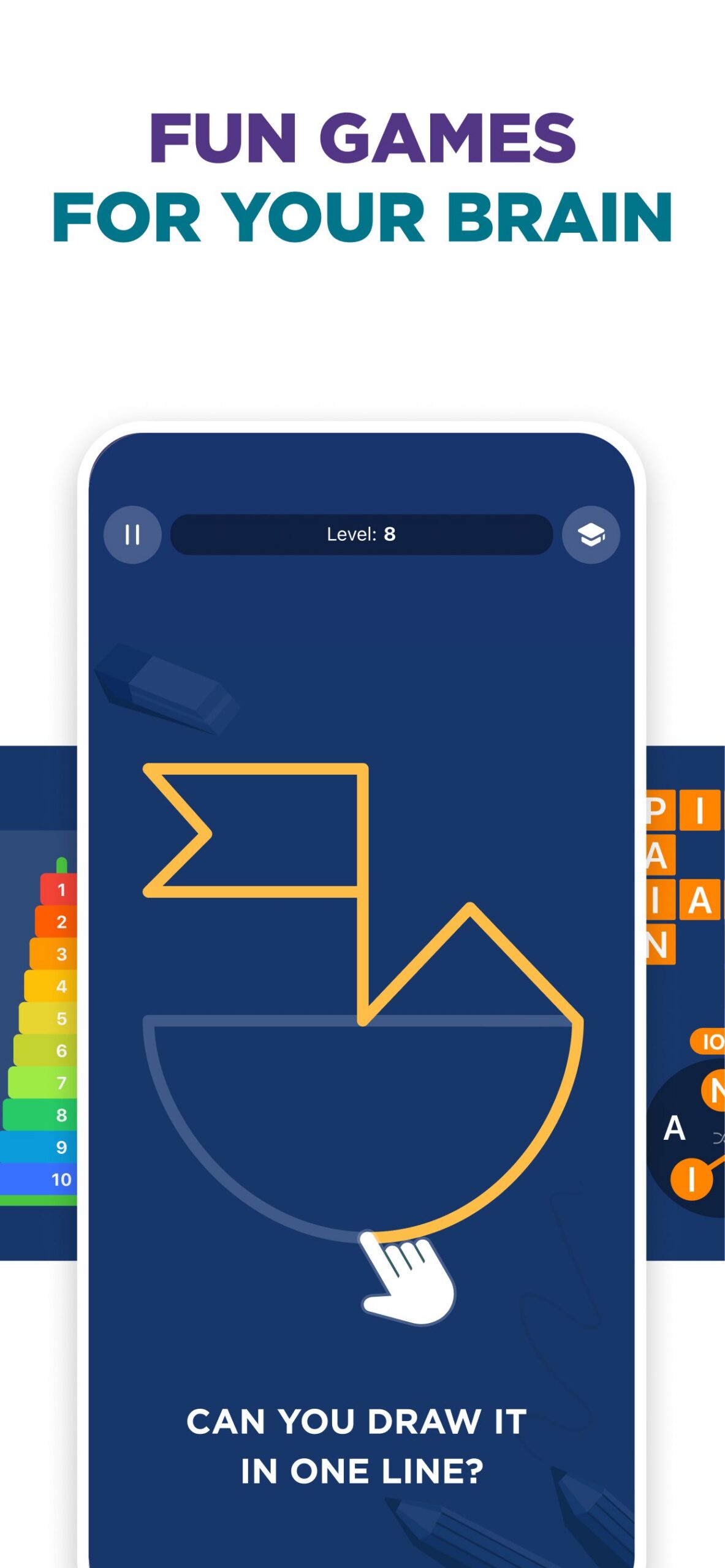
The onboarding flow asks users to identify which cognitive areas they most want to strengthen, then assembles a daily training plan from a curated selection of relevant games. Each game includes a brief explanation of what cognitive function it targets before play begins. Sessions are designed to be completable in approximately five minutes. The app tracks performance trends over time and offers insights about improvement patterns. A streak system rewards daily engagement. At time of writing, Impulse is iPhone-only and does not support iPad or Android.
Caregivers and clinicians should hold an important caveat at the center of any Impulse recommendation: the question of whether cognitive training apps produce real-world functional improvements is genuinely contested in the scientific literature. A major 2016 consensus review published in Psychological Science in the Public Interest, led by Simons and colleagues and signed by over 70 researchers, concluded that the evidence for broad transfer from computerized cognitive training to real-world cognitive functioning was weak, and that claims of lasting benefits were frequently overstated. At the same time, more targeted working memory training research — including work on Cogmed, which uses a more intensive clinical delivery model — has shown modest effects for children with ADHD specifically. Impulse sits between these benchmarks: it is more gamified and less intensive than clinical protocols, and it makes no peer-reviewed outcome claims. What it does offer ADHD users is a short, engaging, varied cognitive workout that delivers the immediate feedback and novelty stimulation the ADHD brain responds to. Whether that engagement translates to functional gains in attention or working memory in daily life is not established for this app specifically.
Who is this best for?
Impulse is best suited for older children, teens, and adults with ADHD who enjoy game-based mental engagement and are looking for a structured daily cognitive practice that is more productive than passive screen time. It is a particularly good fit for individuals who want something brief, stimulating, and completable — a five-minute mental workout that scratches the ADHD brain’s need for novelty and immediate feedback without the risks associated with social media or open-ended gaming. It is not appropriate as a standalone ADHD intervention, and caregivers should not position it as a replacement for medication, therapy, or behavioral supports. The self-discovery features (personality tests, IQ-adjacent assessments) should be introduced carefully with younger adolescents, and results discussed in context to avoid misinterpretation.
Why Impulse Helps
Working memory deficits, reduced processing speed, and attention dysregulation are among the most consistently documented cognitive features of ADHD. Working memory — the capacity to hold and manipulate information in the mind over brief periods — is specifically implicated in many of the functional difficulties ADHD creates: following multi-step instructions, managing distractions, keeping a goal in mind while completing a task, and transitioning smoothly between activities. The appeal of targeting these functions through training is intuitive, even if the transfer evidence remains limited.
Impulse addresses these areas through a format that is particularly well-matched to the ADHD brain’s motivational profile. Sessions are short (approximately five minutes), gamified, varied enough to prevent boredom, and structured around immediate feedback — every game scores performance in real time and tracks progress across sessions. This combination maps directly to the features of technology engagement that ADHD brains find most activating: constant novelty, instant consequence, visible forward progress, and a finite session that can be completed and checked off. The streak system provides an additional external accountability anchor.
The practical value of Impulse for ADHD may be less about whether it produces verifiable cognitive transfer and more about what it replaces. For an adolescent who would otherwise fill a five-minute gap with social media scrolling, Impulse provides a structured, engaging alternative that exercises cognitive flexibility and working memory rather than passively consuming content. This substitution effect — trading passive consumption for active cognitive engagement — is itself clinically meaningful even in the absence of proven long-term gains, because it supports the habit of choosing effortful engagement over passive stimulation.
Limitations and Things to Watch For
- The transfer evidence for brain training is weak. The central promise of cognitive training apps — that improving performance on app-based games will produce meaningful improvements in real-world attention, working memory, or academic functioning — is not well supported for commercial brain training apps generally, and Impulse has no published efficacy research of its own. Caregivers should be direct about this with children and clinicians.
- iOS only; no iPad or Android support. Impulse is currently iPhone-exclusive, which significantly limits access for families who use Android devices or who primarily use tablets.
- The app uses advertising and cross-app tracking in the free tier. Impulse’s privacy disclosures indicate data collection for third-party advertising and cross-app tracking on the free tier. This is a meaningful concern for families with children under 13, and caregivers should consider the subscription tier (which removes ads) for younger users.
- The self-discovery features warrant contextual framing. The app includes IQ-adjacent tests and personality assessments. These are not validated clinical instruments, and presenting them to an adolescent without appropriate framing — particularly a child who has struggled with academic self-concept — risks misinterpretation of scores as meaningful clinical data about their intelligence or ability.
- No accessibility features disclosed. The developer has not disclosed accessibility support. For users with processing difficulties, sensory sensitivities, or visual impairments, there is no declared accommodation.
- Not designed for children under 9. While the App Store rating is 4+, the cognitive content — pattern recognition, rapid response, numerical reasoning — assumes a cognitive developmental baseline more consistent with 9 and older. Younger children may find the games frustrating without support.
Bottom Line
Impulse is an engaging, well-executed cognitive training app with an enormous user base and a format — short, gamified, varied, and immediately rewarding — that is genuinely well-matched to the ADHD brain’s motivational profile. Its limitations are real and should be disclosed honestly: the broader brain training literature does not robustly support claims that app-based cognitive exercise produces lasting real-world functional gains, and Impulse has no app-specific efficacy research. Its most defensible value for ADHD users is as a productive, stimulating daily practice that provides effortful cognitive engagement in the brief windows where passive screen time is the competing alternative. Used with calibrated expectations — as a daily brain warmup and phone-time substitution tool rather than a therapeutic intervention — and with appropriate monitoring for hyperfocus and advertising exposure, it is a reasonable addition to an ADHD support toolkit for older children and adolescents who enjoy game-based mental engagement.
Related Guides








Join our Newsletter!
Related Articles