
Overview
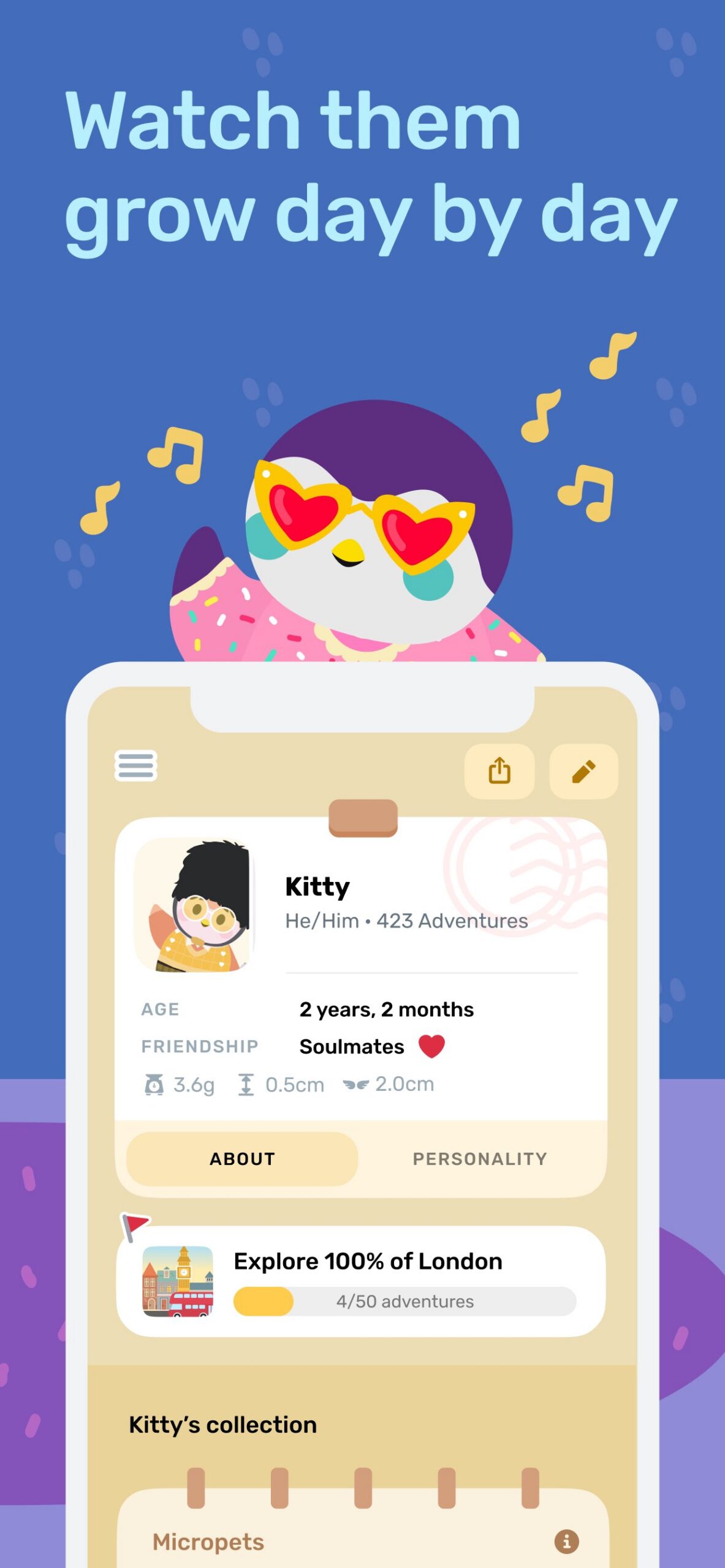
Finch is a self-care app built around a virtual pet bird, developed by Finch Care Public Benefit Corporation — a corporate structure that signals the company’s stated commitment to social impact over pure profit maximization. The app’s central premise is disarmingly simple: users take care of their Finch bird by taking care of themselves. Daily check-ins, completed self-care goals, and mindful exercises earn the bird energy to go on adventures; at the end of each day, the bird returns with a small story to share. The mechanic is not incidental to the app’s effect — it is the engine of it.
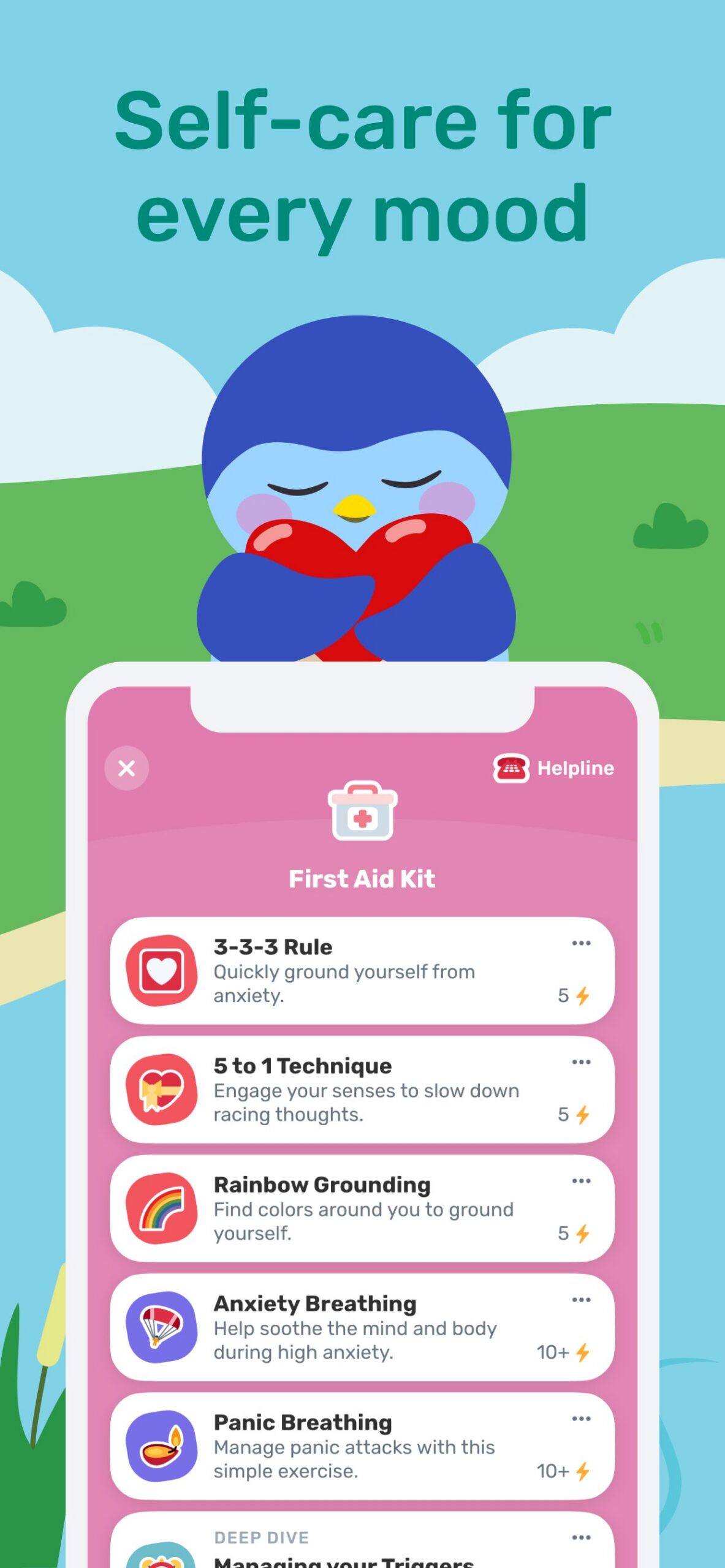
The feature set spans multiple evidence-adjacent wellness categories. Morning check-ins prompt quick mood ratings and mindful habit selection. Evening wind-down sessions guide reflection and next-day goal planning. Built-in exercises include guided breathing, bullet journaling with structured prompts, yoga and movement guides (including couch-friendly options for low-energy days), sleep support, and guided visualizations. A “First Aid” widget provides rapid-access breathwork for acute distress — including panic attacks. A quizzes feature includes standardized-adjacent symptom checks for anxiety, depression, and body image. A longitudinal Insights dashboard synthesizes mood trends, journal tags, and goal completion data to surface patterns over time. Users can also customize their bird with pronouns, accessories, and pride flags.
Finch holds no peer-reviewed clinical research and was not built on a published evidence base. Its design draws on principles of behavioral activation (the key behavioral therapy mechanism for depression), mindfulness practice, and positive psychology, but it is a wellness app rather than a clinical tool. With approximately 690,000 App Store ratings averaging 4.9 stars — an unusually high volume and score — and a large, active online community (“Finch Fam”), it has demonstrated sustained real-world engagement at scale.
Who is this best for?
Finch is best suited for older children, teens, and adults — approximately 9 and up — who are dealing with depression, low mood, anxiety, or general stress and who need a low-barrier daily anchor for self-care practice. It works particularly well for individuals who have struggled to maintain consistency with journaling apps, meditation tools, or wellness programs because those tools feel like obligations; Finch’s virtual pet mechanic re-frames the same practices as acts of care for someone else, which is often more motivating when internal motivation is depleted. The app is not a substitute for clinical care, and caregivers and clinicians should be aware that it is a supplement — not a treatment. For adolescents already in therapy, Finch can extend the reach of skill practice between sessions and provide clinicians with longitudinal mood data from the Insights dashboard.
Why Finch Helps
Anxiety in children and adolescents produces physiological arousal — racing heart, shallow breathing, muscle tension — that narrows cognitive flexibility and blocks access to rational thought. The most effective first-line response to acute anxiety is physiological down-regulation: breathing techniques, grounding exercises, and body-based tools that reduce arousal before cognitive strategies become accessible. An anxious child who is told to “think about it differently” before their nervous system is calm will struggle to do so; a child who completes a box-breathing cycle first is measurably better positioned to engage their prefrontal cortex.
Finch provides rapid-access physiological regulation tools throughout its interface. Guided breathing exercises are available from the home screen. The First Aid widget is specifically designed for acute distress and panic — it surfaces immediately without navigating menus, which is critical when anxiety is high and cognitive load capacity is low. Guided visualizations support parasympathetic activation. The morning mood check-in builds the habit of noticing emotional state before distress peaks — early self-awareness is one of the most effective long-term anxiety management skills, because it allows intervention before the nervous system reaches high arousal.
For anxious adolescents, Finch has a practical advantage that should not be underestimated: it looks and functions like a pet game. A teen who is self-conscious about being seen as anxious or struggling will not use a tool that announces its therapeutic purpose in public. The fact that using Finch in a classroom, on a bus, or at a social event looks like interacting with a virtual pet — not like using an anxiety app — significantly raises the probability that an anxious teen will actually reach for it when they need it.
How to Support an Anxious Child with Finch
- Introduce breathing tools before a crisis, not during one. Have the child explore and practice the app’s breathing exercises during a calm period so they are familiar and accessible when distress rises. First-time use during acute anxiety is less effective than using a tool they have already internalized.
- Use the morning check-in as an anxiety awareness ritual. A brief daily mood log before anticipated stressors — school mornings, social days, exam periods — builds the self-monitoring habit that allows early intervention before anxiety escalates.
- Leverage the First Aid widget for acute support. Caregivers can introduce the First Aid breathwork to the child as their “panic toolkit” — a specific, named tool to reach for when physical anxiety symptoms start. Naming the tool and practicing it proactively reduces the cognitive load required to use it during distress.
- Encourage discreet use in high-anxiety environments. Let teens know that Finch can be used quietly without drawing attention. This removes the social anxiety that might otherwise prevent a teen from using any coping tool in a public setting.
- Pair with the child’s therapeutic anxiety work. If the child is in therapy for anxiety, review which Finch exercises align with their treatment approach. Using the same techniques — box breathing, grounding, behavioral activation — in Finch and in therapy reinforces learning through consistent repetition.
Why Finch Helps
Depression in children and adolescents creates a specific functional trap: the condition itself erodes the motivation required to use coping tools, making the most effective interventions the hardest to initiate. Behavioral activation — the evidence-based principle that engaging in small, low-barrier activities can shift mood even when motivation is absent, because action and mood are reciprocally linked rather than sequential — is the cornerstone of behavioral treatment for depression. The clinical challenge is almost always activation energy: getting the person to do the small thing when they feel certain it will not help.
Finch’s virtual pet mechanic is one of the most effective low-barrier activation hooks currently in any wellness app. The bird is not the user’s mood; it is a dependent other that the user is responsible for. This reframe matters clinically. Research on caregiver motivation and animal-assisted therapy consistently finds that caring for another creature can activate prosocial motivation even when self-directed motivation is depleted — the same mechanism that prompts a depressed person to feed a pet even on a day when they do not feed themselves. For depressed teens who have tried and abandoned journaling apps because the activity felt purposeless, the bird changes the purpose: they are not reflecting for their own benefit, they are doing it so the bird can go on adventures.
The practical design reinforces this. There is no negative consequence for missed days — the bird does not die, lose health, or express disappointment. Progress is cumulative and additive. The minimum viable engagement is extremely low: a single mood log or one completed breathing exercise counts. Movement and body-based exercises are available as options, addressing the physical heaviness of depression directly. The longitudinal Insights dashboard is particularly valuable for depressed adolescents and their clinicians: depression systematically distorts retrospective self-report (“I’ve been feeling terrible for weeks”), and the objective mood record provides a more reliable baseline than memory.
How to Support a Depressed Child with Finch
- Set the bar at one daily action, not a full routine. On hard days, the goal is opening the app and completing one thing — a single mood check, one breathing exercise, one journal sentence. Acknowledge that as a success. The behavioral activation principle holds even for micro-actions.
- Use movement and body-based exercises first on low-energy days. Yoga, breathing, and the couch-friendly movement guides address the physical component of depression before requiring cognitive engagement. Starting with the body is both more accessible and more likely to produce a shift that makes other exercises possible.
- Share the Insights dashboard with the child’s clinician. The longitudinal mood record, completed goals, and journal tags provide objective data that a depressed child often cannot accurately reconstruct verbally. A therapist who can see trends across weeks has a more reliable clinical picture.
- Avoid framing the app as therapy. Finch is a companion tool that makes behavioral activation easier to initiate. Framing it as the treatment sets expectations it cannot meet. Frame it instead as something that helps the child practice the same kinds of skills their therapist is teaching.
- Use between-session engagement as a progress signal. Consistent daily use of Finch between therapy appointments is itself behaviorally meaningful — it reflects that the child is maintaining a daily self-care practice. Celebrate this with the child as evidence of capacity and agency.
Limitations and Things to Watch For
- No clinical evidence base. Finch has not been studied in peer-reviewed research. Its design draws on behavioral activation theory and mindfulness, but it is a wellness application, not a clinically validated therapeutic tool. Caregivers should calibrate expectations accordingly.
- The virtual pet mechanic can wane. User reviews note that long-term users sometimes begin to feel the engagement loop is not growing — checking boxes to complete goals can become rote rather than reflective. This is a real engagement risk, particularly for adolescents, and caregivers should watch for signs that the child is completing tasks mechanically without genuine engagement.
- No crisis resources. Finch does not include suicide crisis lines, safety planning tools, or connections to clinical care. For children experiencing significant depressive episodes or acute safety concerns, it is not an appropriate primary resource and should not be positioned as one.
- The Insights and quiz features are wellness tools, not clinical assessments. The app’s anxiety and depression quizzes are not validated diagnostic instruments. They are useful for self-reflection and trend monitoring, but caregivers and clinicians should not treat scores as clinical measures.
- The online community requires monitoring for younger users. Finch has an active Discord and social media presence. For children under 14, caregiver awareness of community engagement is appropriate; mental health communities, however supportive in intent, can occasionally normalize struggle in ways that require adult context.
- Subscription required for full access. The free version is functional, but the complete exercise library, custom soundscapes, and additional customization features require Finch Plus. The $5.99/month tier is accessible, but caregivers should note the ongoing cost.
Bottom Line
Related Guides









Join our Newsletter!
Related Articles