
Overview
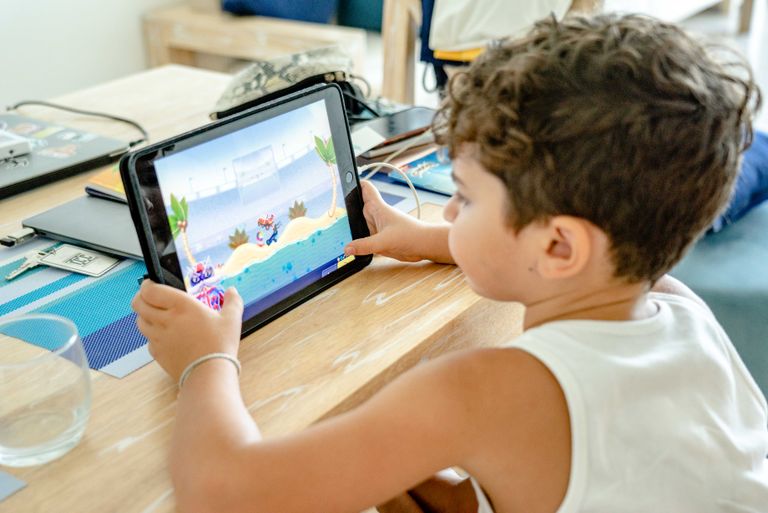
Proloquo2Go is an AAC (augmentative and alternative communication) app for kids who can’t rely on speech. A child taps picture buttons or types on a keyboard, and the app says the message out loud in one of more than 100 natural-sounding voices, including real children’s voices. AssistiveWare, a Dutch company, launched it in 2009 as one of the first full AAC systems for the iPhone and iPad, and AssistiveWare says it is now the most popular AAC app in the world.
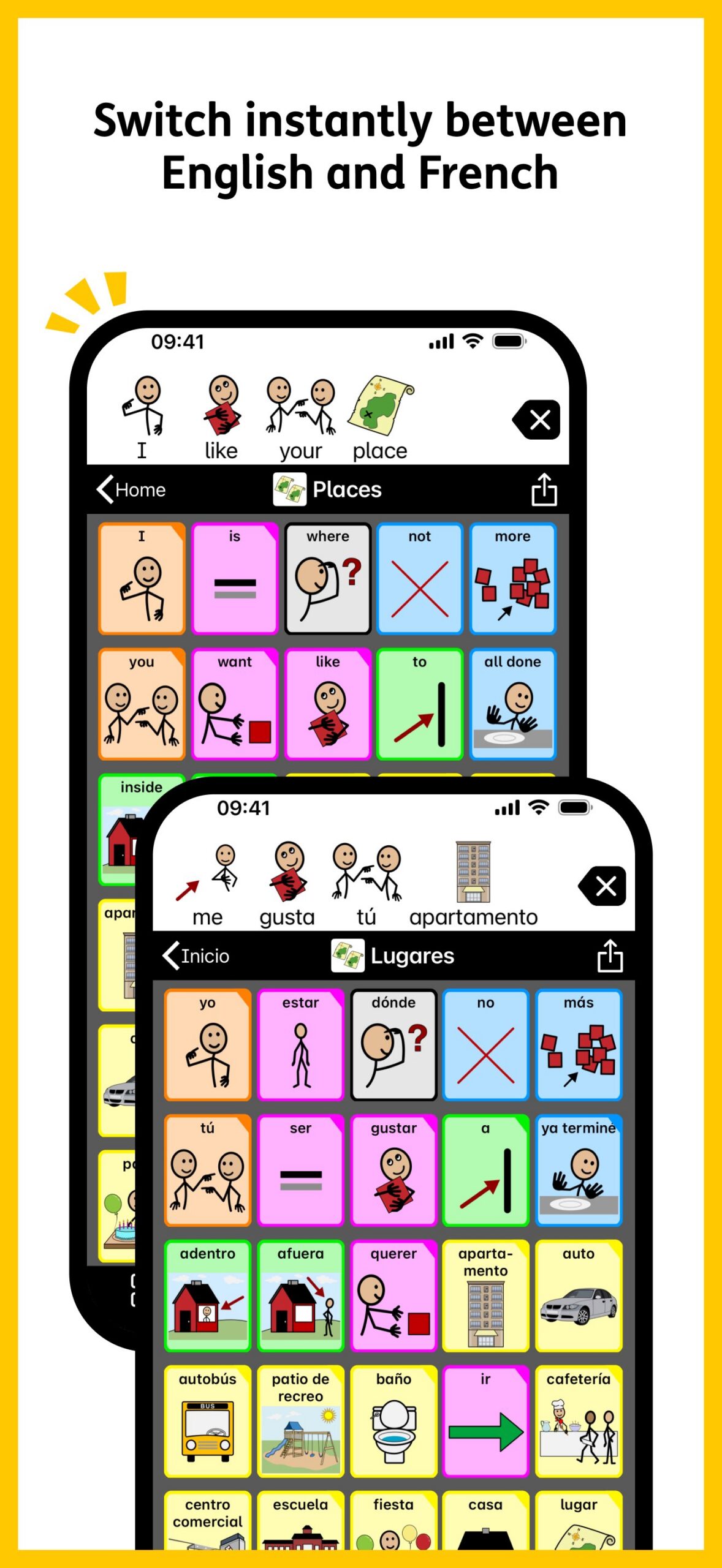
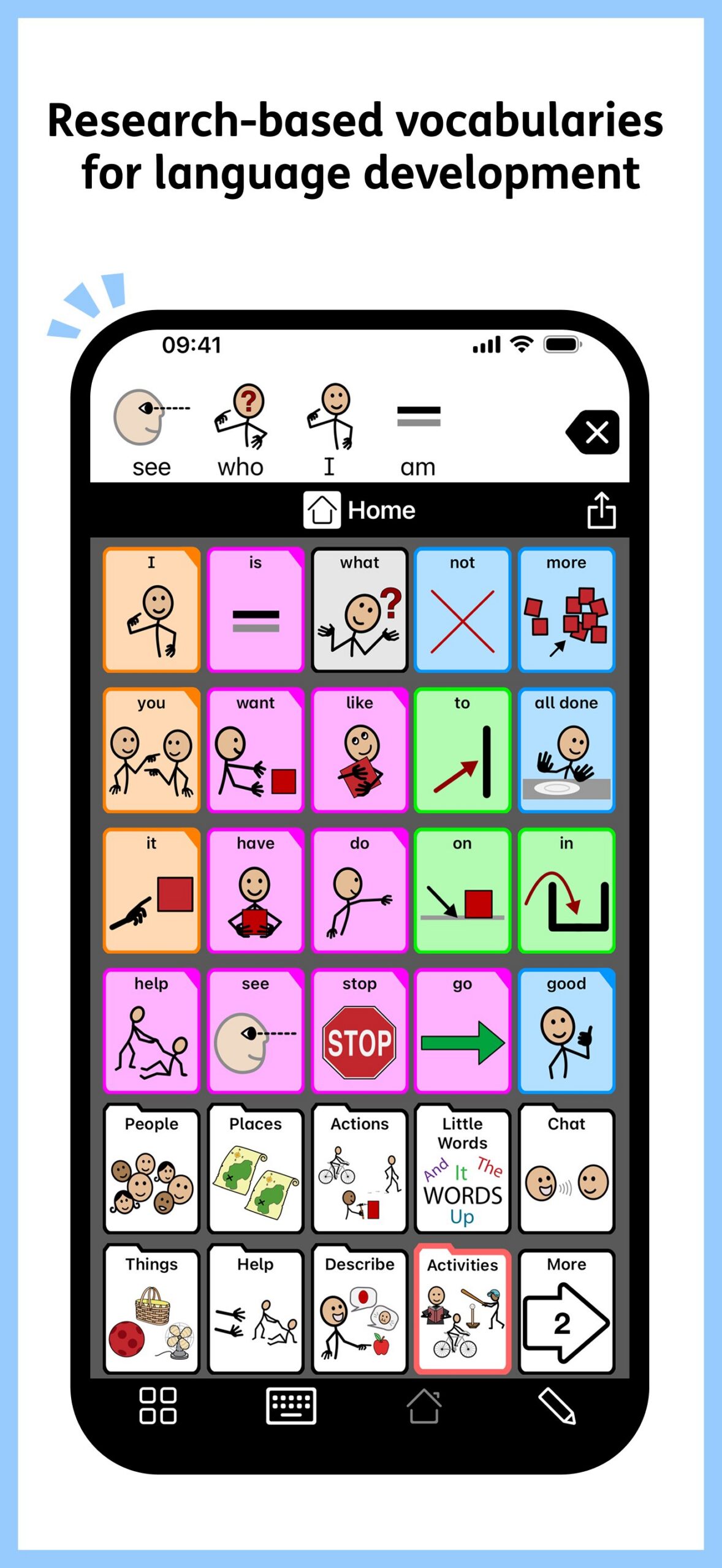
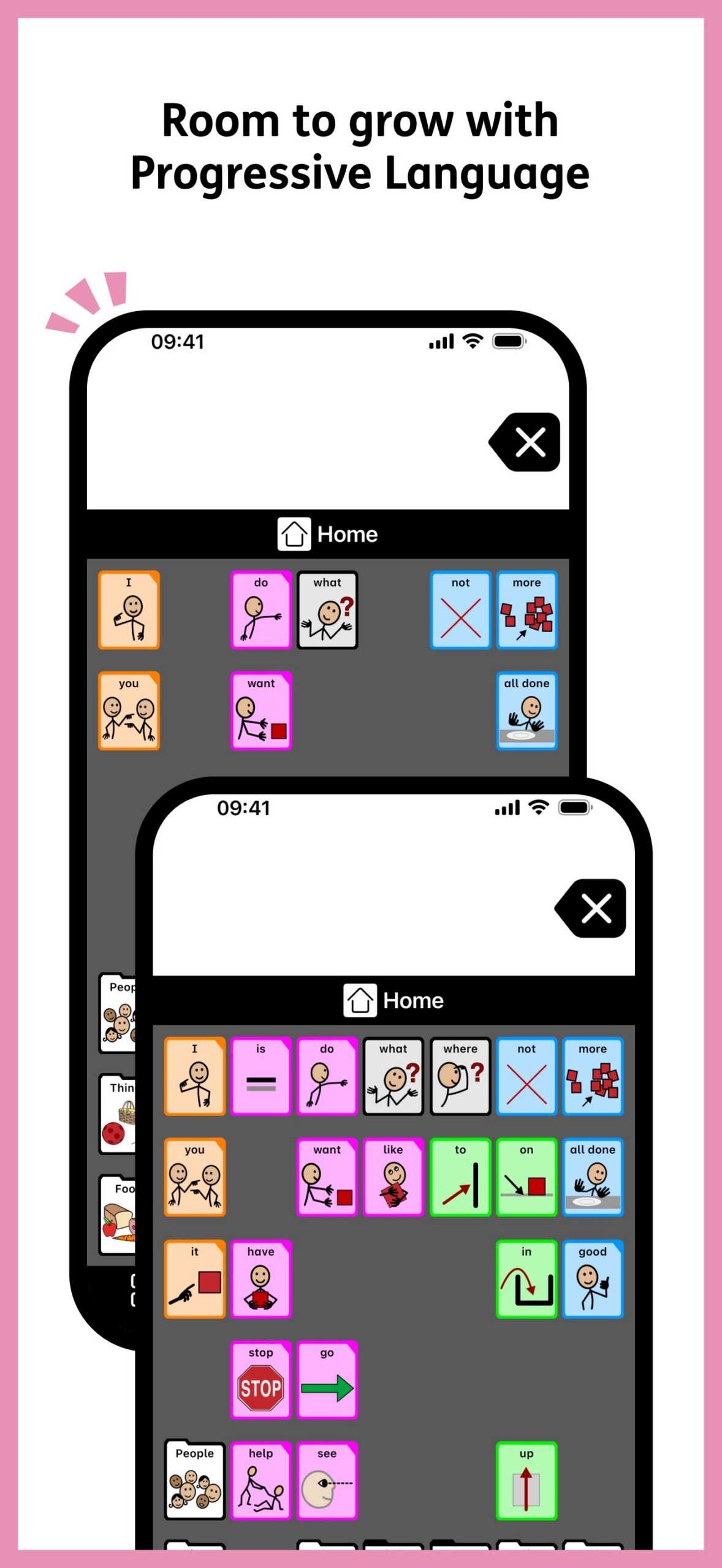
The app runs on Crescendo, a vocabulary built around “core words.” A few hundred words, like want, more, go, stop, and not, make up about 80% of what people say, and Proloquo2Go keeps them in the same spot on every page so a child’s hands learn where they are. Behind them sit more than 10,000 specific words, over 25,000 symbols, and the option to add photos of real people, foods, and places. A feature called Progressive Language reveals new words as a child is ready for them. Adults can choose from 23 grid sizes (9 to 144 buttons per page), set up switch access for kids with motor challenges, and use two languages at once in English, Spanish, French, or Dutch.
Who is this best for?
Proloquo2Go is best for children who can’t count on speech to be understood. Its largest group of users is nonspeaking and minimally speaking autistic kids, but it also serves kids who talk but are hard to understand, such as children with childhood apraxia of speech or a severe language disorder. It can help kids whose meltdowns, hitting, or shutting down come from not being able to say what they need. The same app grows from single picture buttons to full typed sentences with word prediction, so a preschooler can start on it and still use it as a teenager. It works best when a speech-language pathologist (SLP) helps set it up and the adults around the child learn to use it too.
Neurodivergencies
The sections below explain why Proloquo2Go’s features are a good match for each neurodivergency and offer practical guidance for caregivers and clinicians on how to use it effectively.
Why Proloquo2Go helps
Somewhere between a third and a half of autistic children have little or no functional speech. Without a reliable way to communicate, they point, pull adults by the hand, or melt down, and the people around them are left guessing. Proloquo2Go gives these kids a way to ask for things, refuse, comment, ask questions, and joke, in a format that fits how many autistic kids learn. The screen is visual and predictable, a button always does the same thing, and core words never move, so a child can rely on motor memory instead of hunting. The research backs this up. In a 2014 randomized trial of 61 minimally verbal autistic children ages 5 to 8, led by Connie Kasari at UCLA, kids who had a speech-generating device from the start of a play-based therapy program made more spontaneous attempts to communicate and used more new words than kids who got the same therapy without one. The most common parent worry, that a talking device will keep a child from learning to speak, doesn’t hold up either. A review of the best-designed studies by Millar, Light, and Schlosser found that none of 27 cases lost speech after starting AAC, and 89% gained speech.How to use Proloquo2Go for Autism
- Model it yourself. Tap the words on the device as you say them: “Let’s GO OUTSIDE.” Kids learn AAC the way babies learn speech, by seeing and hearing it used thousands of times before anyone expects them to use it. A 2016 review by Sennott, Light, and McNaughton found that adult modeling led to gains in vocabulary, sentence length, and back-and-forth turns.
- Keep it within arm’s reach all day. The device is the child’s voice, so it should come to meals, the playground, the car, and the grocery store. A carrying strap or rugged case makes this easier.
- Leave the core words where they are. Add new buttons freely, but don’t rearrange the core layout. Kids find words by where their hand goes, and moving buttons erases that learning.
- Start with a larger grid. AssistiveWare’s own data shows that kids on grids smaller than its recommended 77 buttons have poorer language outcomes, and 80% of users don’t follow the recommended settings. Ask the SLP about using a larger grid with Progressive Language hiding words until the child is ready, instead of shrinking the grid.
- Build in special interests. Add buttons and real photos for trains, dinosaurs, or a favorite show. A child is far more likely to reach for the device to talk about something they love.
- Let them babble. Tapping the same button 20 times or flipping through pages at random is how kids learn where words are. Resist the urge to take the device away for “just playing.”
- Lock it down. Turn on the iPad’s Guided Access so the child can’t leave Proloquo2Go for YouTube or games, and set a password or security question on the app’s Options so buttons don’t get deleted by accident.
Why Proloquo2Go helps
Some kids know exactly what they want to say but can’t get it out in a way others understand. Children with childhood apraxia of speech (CAS) have trouble planning the mouth movements for speech, so their words come out inconsistent and hard to follow, even when their understanding is right on track. Children with developmental language disorder or other expressive language disorders may struggle to find words or put them in order. For both groups, the gap between what they know and what they can say leads to frustration, and to adults underestimating them. Proloquo2Go gives these kids a second channel. When a teacher or a new friend doesn’t understand, the child can switch to the device, get the message across, and keep the conversation going. AssistiveWare lists developmental apraxia among the conditions Crescendo was designed for, and the app’s grammar support for plurals and verb tenses lets kids practice building full sentences. For kids learning to read and spell, the alphabetical keyboard and a typing view with word prediction connect speech to print. The American Speech-Language-Hearing Association (ASHA) says there is no evidence that AAC makes children with CAS stop trying to talk.How to use Proloquo2Go for Learning and Processing Differences
- Use it as a backup to speech. Encourage the child to try speaking first and to turn to the device when a listener doesn’t understand. Speech practice stays the priority, and the device keeps communication from breaking down in the meantime.
- Match the device to speech therapy. Ask the SLP which words and sentence types the child is working on and add them to the device, so practice carries over to home and school.
- Try the typing view for older kids. A child with CAS who can spell can often say more, faster, by typing with word prediction than by moving through picture pages.
- Let the child pick the voice. There are more than 100 voices, including real children’s and teen voices. A voice that sounds like a peer makes kids more willing to use the device in front of classmates.
- Add repair phrases. Program quick buttons like “Let me show you,” “That’s not what I meant,” and “Wait, I’m typing,” so the child can fix a conversation instead of giving up on it.
- Tell the classroom. Explain to teachers and classmates that the device is how this child talks, and that waiting while they type is part of the conversation.
Why Proloquo2Go helps
For kids who can’t speak, a lot of challenging behavior is communication. Hitting, screaming, throwing things, or running off can be the fastest way a child has to say “stop,” “I need a break,” “that hurts,” or “I want that.” When a child gets a quicker, easier way to send the same message, the behavior often fades because it no longer has a job to do. Behavior specialists call this approach functional communication training.
The research here is strong. A 2013 meta-analysis by Virginia Walker and Martha Snell combined 54 studies involving 111 people with disabilities and found that AAC interventions reduced challenging behavior across a wide range of participants, with the biggest effects in children 12 and under. The interventions worked better when they started with a functional behavior assessment, which figures out what a behavior is trying to accomplish. Proloquo2Go makes this practical, since a “break,” “all done,” or “help” button can sit on the home screen, one tap away.
This help is specific. Proloquo2Go targets behavior that grows out of frustration at not being understood. It won’t do much for oppositional behavior in a child who can already say what they want.
How to use Proloquo2Go for Behavioral and Emotional Problems
- Find out what the behavior is saying. Before adding buttons, track when meltdowns happen and what comes right before them. Ask a BCBA or school psychologist for a functional behavior assessment, which made AAC interventions more effective in the Walker and Snell review.
- Put escape words up front. Make “break,” “stop,” “help,” “all done,” and “too loud” one-tap buttons on the main page. A child in distress won’t dig through folders.
- Honor the request, especially early on. If a child taps “break,” give the break, even when the timing is inconvenient. The device only replaces the behavior if it works as well as the behavior did.
- Add feelings words. Make sure words like mad, sad, scared, and tired are easy to reach, and model them during calm moments (“I’m TIRED”) so the child has them ready when upset.
- Never take the device away as a punishment. Removing a child’s voice after a meltdown removes the tool that prevents the next one.
Limitations and Things to Watch For
The biggest hurdle is cost. At $249.99 before you buy an iPad, Proloquo2Go is expensive for an app, and it only runs on Apple devices. Families shouldn’t assume they have to pay out of pocket. An SLP evaluation can support insurance or Medicaid coverage, and schools may provide a device through an IEP. The optional Gateway vocabulary adds another $149.99, but most kids won’t need it unless they already use Gateway on another system. The app also asks a lot of the adults. Its deep customization is a strength, but parents and even experienced AAC users describe the menus as overwhelming at first. Plan on learning it yourself before handing it over. AssistiveWare’s free Learn AAC articles, its Core Word Classroom activities, and its seven-day-a-week support team help. So does keeping changes small: AssistiveWare reports that most users run settings that differ from its recommendations, and smaller grids are linked to weaker language growth. If the device is also the family iPad, games and YouTube will compete with talking, and autistic kids in particular can struggle to switch off preferred screens. A dedicated device locked with Guided Access avoids this. Keep a free printable core word board from AssistiveWare’s website for the pool, the bath, and dead batteries. Proloquo2Go does not use generative AI. It speaks only the words a child selects or types, and it doesn’t write or suggest messages beyond standard word prediction. The App Store listing says the app collects a device ID and usage data that are not linked to the user’s identity. There is no mature content, though a child who can type can say anything they like. Finally, AssistiveWare released a newer app, Proloquo, in 2022, designed from five years of research with a different vocabulary layout. Families starting fresh may want to compare the two with their SLP.
Bottom Line
For a child who can’t rely on speech, Proloquo2Go can replace guessing with real conversation. It is one of the most widely used AAC apps for good reasons: a core vocabulary that stays in place, room to grow from single words to typed paragraphs, and deep customization for motor, vision, and language needs. The research on AAC is solid. In a randomized trial, minimally verbal autistic kids who got a speech-generating device made more spontaneous attempts to communicate, AAC doesn’t stop children from learning to talk, and giving a child a way to say “stop” or “break” reduces the behavior that used to say it for them. The drawbacks are a high price, an Apple-only system, and a learning curve for adults. Families worried about cost should start with the SLP and the school, since insurance, Medicaid, and IEPs can all cover AAC. Proloquo2Go works best when an SLP helps with setup, when parents and teachers model it every day, and when the device goes everywhere the child goes.
Related Guides









Join our Newsletter!
Related Articles